
You know the feeling. It’s tax season, and you’re sitting at your kitchen table surrounded by a year’s worth of receipts, trying to remember what that September lunch with a client actually cost — and whether you kept the bill. Your accountant has been patient, but the questions keep coming: Do you have a vehicle log? Was that home office expense tracked? What about the equipment you bought in February? And somewhere in the pile, you realize money is disappearing. Not from fraud or bad investments — from bad bookkeeping.
Here’s what most business owners don’t realize: bookkeeping isn’t admin. It’s money. It’s one of the 7 Destroyers of Wealth — the one we call Not Knowing Your Numbers — doing its quietest work. Every deduction you miss, every deadline you blow, every blurred line between your business and your personal life is a leak in the Financial House. And the leaks are almost never in the big-ticket items. They’re in the small, boring, fixable habits.
Over the years I’ve helped Canadian business owners and professionals get their books in order, I’ve watched the same mistakes cost the same thousands — over and over. Here are the seven I see most often, and what to do about each one.

Why Bookkeeping Mistakes Are So Expensive
In the Financial House framework, every dollar you earn flows through four rooms: Earn, Save, Grow, and Protect. Your business is the engine in the Earn room. But your books are the wiring that connects the whole house — and when the wiring is a mess, every room suffers.
In the Save room, missed deductions mean you hand the CRA more than you owe. In the Grow room, you can’t invest what you can’t see — if you don’t know your real profit, you don’t know what’s actually available to grow. And in the Protect room, disorganized records make a CRA review or an audit far more painful than it needs to be. One system failure quietly damages all four rooms at once.
The uncomfortable truth: business owners are more vulnerable than most. You’re busy running the business. You hire a bookkeeper or an accountant and assume it’s handled. But no one cares about your numbers as much as you do — and the CRA isn’t going to send you a refund for the deductions you forgot to claim.
The Mistakes That Cost You Deductions
This is where most owners bleed money without ever seeing it. The CRA has no idea what you didn’t claim — so every untracked or unclaimed expense is a permanent loss, not a deferral.
Mistake #1: Not tracking expenses in real time. The receipt goes in the glovebox, the drawer, the pile on the counter — “I’ll deal with it later.” Later is tax season, and by then you’re guessing. Guess wrong and you either overpay (missing the deduction) or you claim something you can’t back up (inviting questions). The fix is embarrassingly simple: capture the expense the moment it happens. Snap a photo with your phone and file it — most accounting tools let you photograph a receipt and it’s done. If it takes longer than thirty seconds, it’s still worth it. A tracked dollar is a deductible dollar; an untracked one is a donation to general revenue.
Mistake #2: Missing the deductions you’re entitled to. You’d be surprised how many business owners never claim a home office — or claim it but skip the portion of utilities, internet, and maintenance that goes with it. Vehicle use is another one: the CRA lets you claim the business portion of your vehicle expenses, but only if you have a log showing the split. Professional dues, course fees, equipment purchases claimed through capital cost allowance, the business portion of your cell phone — the list is longer than most people think, and every item is money coming back to you instead of going to Ottawa.
Here’s a reframe I use with clients: think of each deduction as a small refund you have to apply for yourself. That’s why it pays — literally — to spend one afternoon a year going through the CRA’s list of business expenses with fresh eyes, or better yet, to have your accountant walk you through what applies to you.

The Mistakes That Cost You Penalties
Missing a deduction is a quiet loss. Missing a deadline is a loud one — interest and penalties on top of what you owed, plus the stress of a letter from the CRA.
Mistake #3: Not setting aside for the taxes you owe. When you collect GST/HST on a sale, that money isn’t yours — it’s the government’s, parked in your account for a few months. The same goes for the income tax on your profit. Owners who treat that balance as working capital are the ones scrambling in June or September, borrowing or reaching for credit to cover the bill. The fix is automatic: the day money lands, sweep the tax portion into a separate account. You never see it, you never miss it, and you’re never surprised.
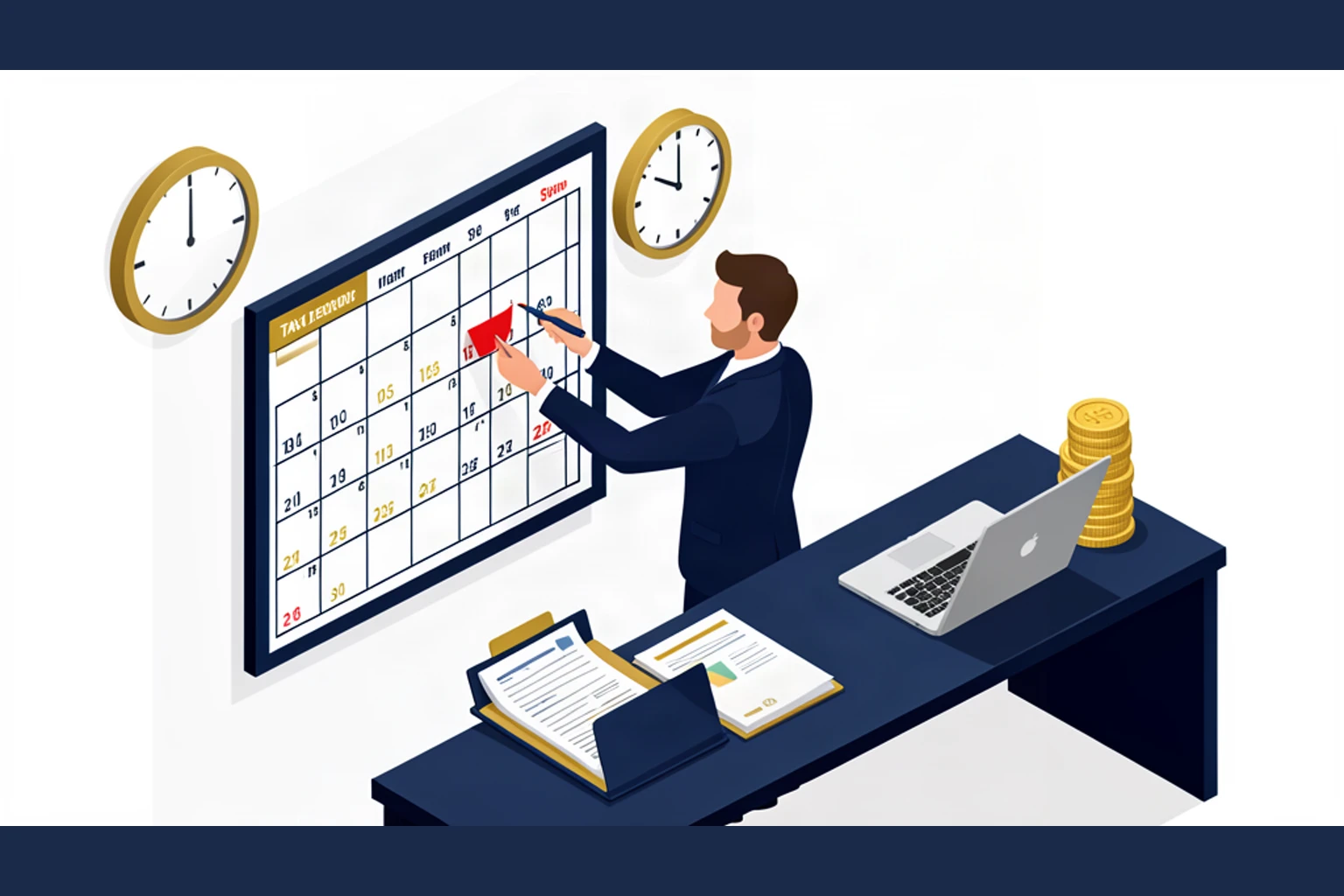
Mistake #4: Missing remittance and filing deadlines. GST/HST returns, payroll source deductions, corporate tax installments — each has its own deadline, and the CRA charges interest and penalties on late amounts with zero sympathy for busy schedules. The good news: this one is fixable with a calendar. Put every deadline in your calendar the day you incorporate (or the day you register for GST/HST), set reminders a week ahead, and the problem largely disappears. If you want to know what’s actually at stake when records are messy, my CRA audit survival guide walks through what the CRA really looks for.
The Mistakes That Distort Your Picture
Some mistakes don’t cost you directly — they cost you by lying to you. When your numbers don’t reflect reality, every decision built on them is built on sand.
Mistake #5: Mixing business and personal expenses. The business card pays for dinner; the line between “client” and “family” blurs; the car is leased through the company but half the mileage is personal. On one level it feels efficient — pre-tax dollars! But it distorts your true profit, creates a mess at tax time, and raises red flags if the CRA ever reviews your returns. I’ve written before about the system for separating business and personal finances — it’s one of the highest-ROI changes a business owner can make.
Mistake #6: Not paying yourself consistently. Some owners take a big draw when things are good and nothing for months when they’re not. That creates two problems: your personal finances are a roller coaster, and at tax time you or your accountant have to untangle whether those draws were salary or dividends — each taxed differently, with different consequences. A steady, planned owner payment — decided in advance, taken on a schedule — makes both your business and your personal life more stable. If you’re unsure which structure is right for you, my breakdown of salary vs. dividends covers the trade-offs.
Mistake #7: Never reviewing your numbers. This is the quiet one — the destroyer in its purest form. You can have perfect records and still be financially blind if you never actually look at them. When was the last time you knew, without checking, what your monthly burn rate is? Your real profit margin? Which clients are actually worth your time? The business owners who make the best money decisions aren’t the ones with the fanciest spreadsheets — they’re the ones who look at their numbers monthly, while there’s still time to act on what they see.
The Fix That Doesn’t Require More Willpower
Here’s the part that should relieve you: you don’t need to become a bookkeeper. You need a system — and a small one. Most of the owners I work with turn this around with three habits:
- Capture everything, automatically. Photograph receipts as they happen, use a business card for business spending only, and let your software categorize for you.
- Sweep taxes the day money lands. A separate account, an automatic transfer, and the problem of “where did the tax money go” disappears forever.
- Review your numbers for thirty minutes, once a month. Same day every month, in the calendar. Look at revenue, expenses, cash in the bank, and what you owe. That’s it.
If you don’t have a bookkeeping system yet, start with the simple system I laid out before — it’s designed for owners who’d rather run their business than run their books. The point isn’t perfection. It’s that the numbers stop lying to you, the leaks get plugged, and the Financial House stops losing money from all four rooms at once.
Bookkeeping won’t ever be the exciting part of being a business owner. But it’s one of the few parts where a small, consistent effort pays you back with real money — every quarter, every year, for as long as you own the business. Start with one of these fixes this week. Your April self will thank you.
Not sure where you stand? Take the 2-minute Financial House Assessment and get your personalized report — free.
Want to go deeper? Check out Essentials of Money ($50), The Wake Up Call ($50), or book a free discovery call.