
You’ve spent years building your business. Maybe you started it in your basement with a laptop and a dream. Maybe you bought it, grew it, and turned it into something that pays your family’s bills and a dozen other families’ bills too. It’s your biggest asset — worth more than your house, your car, and your investments combined.
So here’s the question nobody wants to sit with: what happens to it if you’re gone tomorrow?
Not “someday.” Tomorrow. If you died tonight, would your spouse know what to do with the company? Would your kids inherit it — or would the CRA get the biggest slice first? Would your business partner’s family and your family end up in a legal fight that drains the whole thing? For most Canadian business owners, the honest answer is: nobody knows. And that’s exactly why estate planning for business owners is one of the most important — and most ignored — pieces of financial protection there is.
In my Financial House framework, the four rooms are Earn, Save, Grow, and Protect. Most business owners live in the first three rooms their whole careers and never finish building the fourth. This article is about finishing it.
Why Your Business Changes Everything
For a regular employee, estate planning is relatively straightforward. You have a will, you name beneficiaries on your RRSP and TFSA, and your family gets what’s yours with minimal fuss. Your assets are mostly liquid — cash, investments, a house.
A business is different in three big ways:
First, it’s illiquid. Your wealth is tied up in equipment, inventory, receivables, client relationships, and goodwill. Your family can’t split that like a bank account. They can’t easily sell “half a business” to pay a tax bill.
Second, it’s complicated. The CRA doesn’t just tax your business when you sell it. In many cases, it treats you as if you sold everything at fair market value on the day you die — a “deemed disposition” that can trigger a massive capital gains tax bill. That bill has to be paid in cash, typically within six months of death.
Third, it’s personal. Your business may be run by you, with your name on the door and your relationships holding the clients. That kind of business often doesn’t survive its founder — unless there’s a plan that deliberately transfers the relationships, the knowledge, and the keys.
What Actually Happens Without a Plan
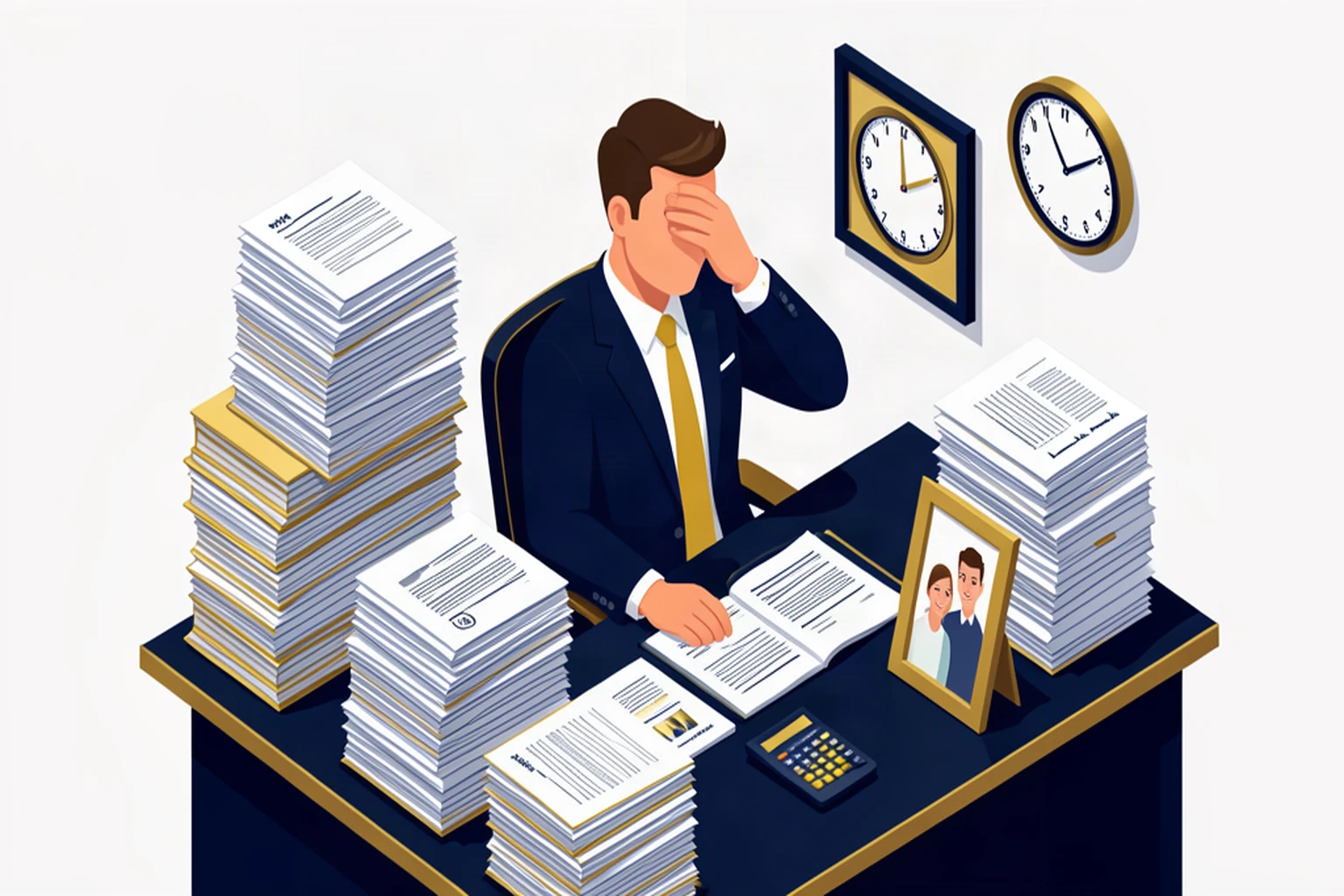
Let’s be concrete about the cost of doing nothing. If you die without a valid will, your province’s intestacy rules decide who gets what. In Ontario, for example, the rules divide your estate between your spouse and your children — but they don’t think about your business at all. The shares of your company could end up in the hands of family members who’ve never run a business, while your business partner’s hands are tied, unable to buy them out or make decisions without unanimous consent.
Meanwhile, your family needs cash. The funeral costs, the mortgage, the living expenses — and then the tax bill from that deemed disposition lands. To raise cash, they may be forced to sell the business in a hurry, at a discount, to whoever shows up first. That’s how a business that took you twenty years to build gets sold for pennies on the dollar in six months.
There’s also probate. In many provinces, estates pay probate fees based on the total value of everything that passes through the will — and in Ontario, that’s roughly 1.5% of the estate’s value. On a $2 million estate, that’s $30,000. On a business owner’s estate, which often includes the company shares, a house, and investments, that number adds up fast. Some of those assets can be structured to bypass probate entirely — but only if you plan it.
And then there’s the emotional cost, which is the one nobody budgets for. Your spouse, grieving and overwhelmed, suddenly has to deal with lawyers, accountants, bankers, landlords, employees, and a CRA deadline — all at the worst moment of their life. Estate planning isn’t just about money. It’s about not handing your family a crisis on top of a tragedy.
The Three Documents Every Business Owner Needs
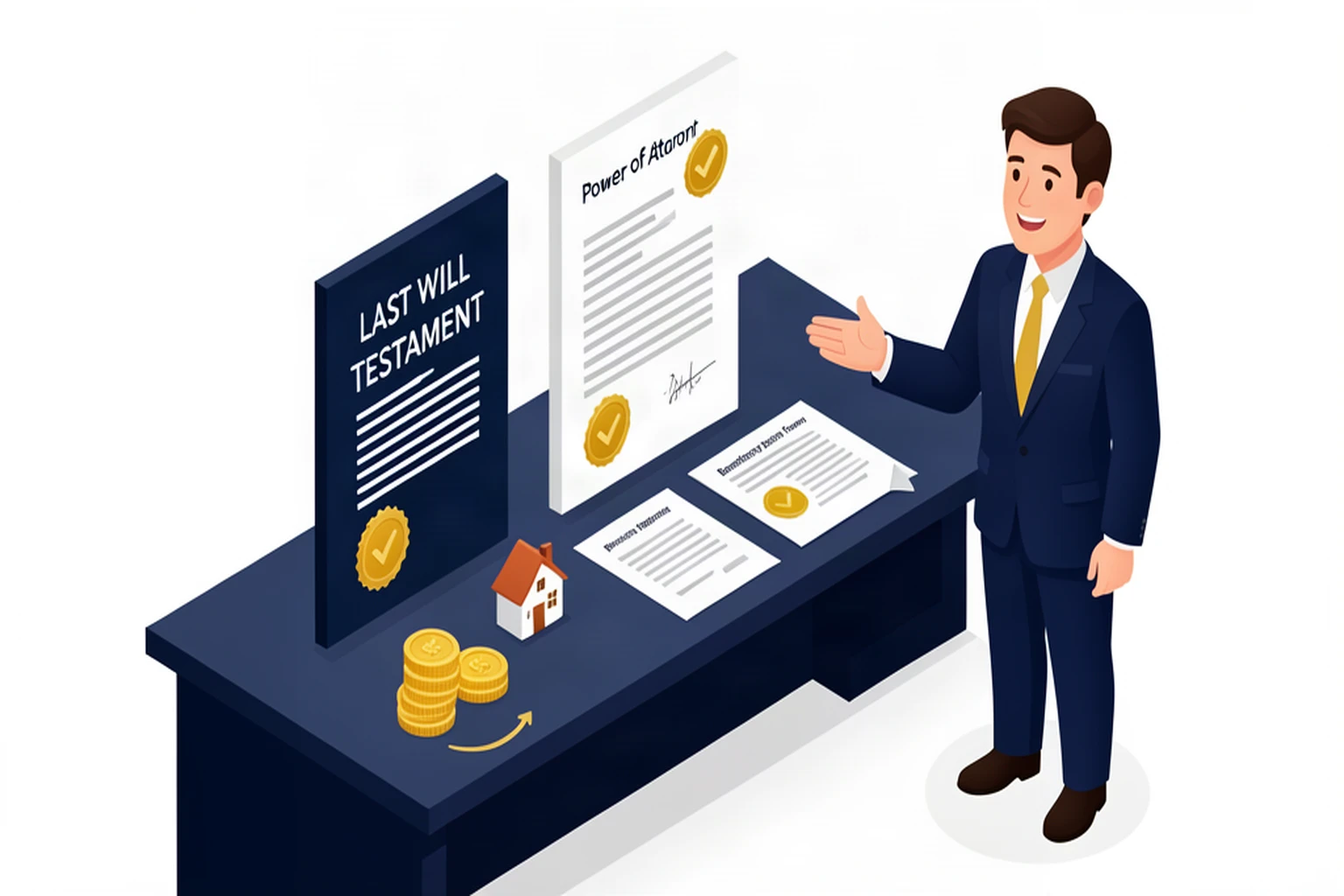
Estate planning sounds complicated, but it starts with three documents. If you have nothing else, get these three in place this year:
1. A Will. This is your instruction manual. It says who gets your business shares, who gets your house, who gets your investments, and — critically for business owners — who will be the executor with the authority to sort it all out. Without a will, the government’s default rules make those decisions for you, and they know nothing about your business.
2. A Power of Attorney. A will only kicks in after death. A power of attorney covers you while you’re alive but unable to act — after an accident, an illness, or a sudden incapacity. For a business owner, this is not optional. If you’re in a coma for six months, someone needs to be able to sign payroll, pay suppliers, and keep the business running. Name someone you trust completely, and name a backup.
3. Beneficiary Designations. Your RRSP, TFSA, and life insurance policies can pass directly to named beneficiaries — completely outside your will and outside probate. That means your family gets that money fast, without the court process and without the fees. But here’s the catch: those designations override your will. If you name an ex-spouse as beneficiary years ago and never updated it, the money goes to them no matter what your will says. Review them. Update them.
Your Business Needs Its Own Plan
The documents above are the foundation. But if you own a business, you need to go further — because a business is not an asset that sits still while the paperwork works itself out. It’s a living thing with employees, clients, leases, and momentum. It needs its own succession plan.
Ask yourself three questions:
Who runs it? If you have a business partner, do you have a buy-sell agreement? This is the contract that says what happens to your shares if one of you dies, becomes disabled, or wants out. Without it, your spouse could inherit your shares and become an accidental co-owner with your partner — a recipe for conflict, deadlock, and a destroyed business. With it, there’s a clear process: your family gets a fair price for the shares, and the business continues without you.
How is the buyout funded? A buy-sell agreement is only as good as the money behind it. Most are funded with life insurance — each partner owns a policy on the other. When one dies, the insurance payout funds the purchase of the shares from the family. That’s one of the 5 Methods of wealth building doing real work: insurance as a tool, not a product. It’s the difference between “your family gets paid” and “your family owns a business they can’t run.”
What if it’s just you? Many Canadian business owners are solo operators. If that’s you, your succession plan is about preparing the business to be sold — to an employee, a competitor, or a third party — or deciding which family member, if any, has the skills to take over. That decision shouldn’t happen in a hospital room. It should happen now, on paper, with a professional’s help.

The Tax Bill Nobody Warns You About
Let’s talk about the CRA’s role in all this, because it’s the part most business owners never see coming. On death, the CRA generally deems you to have sold all your capital property at fair market value. For most people, that means the family cottage gets a tax hit. For a business owner, it means your shares — which may have cost you nothing to create but are now worth a fortune — trigger a capital gain, and the tax on that gain is due from your estate.
There are legitimate ways to reduce or defer this, but they require planning:
- The Lifetime Capital Gains Exemption (LCGE) can shelter a significant portion of the gain on qualified small business corporation shares — currently over $1 million and indexed. But the shares must meet certain criteria, and the planning has to happen before the triggering event, not after.
- Spousal rollovers can defer tax when assets pass to a spouse, but the rules around business shares are specific and need professional structuring.
- Corporate-owned life insurance can provide the cash your estate needs to pay the tax bill — and it’s one of the smartest ways to fund estate obligations with every dollar of premium doing double duty.
The point isn’t that you need to know all the rules. The point is that there are rules, and they apply to you automatically on the worst day of your family’s life. A little planning now can save them hundreds of thousands of dollars — and the business itself.
How to Start This Month
I know how this reads: another thing to do, another professional to meet, another folder of paperwork. You’re running a business — you don’t have time for hypotheticals. So let me make it as small as possible.
Step one: take an inventory. Write down what you own and how it’s titled — the company shares, the house, the investments, the insurance policies. Most people discover they have no idea what’s actually in their own portfolio, and that’s the first problem worth solving. This also pairs well with the kind of clean separation of business and personal finances I recommend to every owner.
Step two: name your people. Decide who your executor is, who holds your power of attorney, and who gets what. You don’t need a finished estate plan to do this — you need a conversation with your family and a list of names. That alone puts you ahead of most business owners.
Step three: book one meeting. Meet with an estate lawyer and your financial advisor — ideally together — and bring your inventory. In one or two sessions, they can draft the documents, spot the tax issues, and tell you what insurance structures make sense for your situation. This is a few hundred to a few thousand dollars. The alternative is handing your family a six-figure tax bill and a forced sale. That’s not a real choice.
The Legacy Is the Point
Here’s the thing I’ve learned watching business owners for years: you didn’t build this company just to pay bills. You built it to create something — security for your family, opportunities for your kids, a contribution to your community. That’s a legacy, and a legacy deserves a plan.
The Destroyers of wealth — death, disability, divorce, debt, taxes, inflation, and bad advice — don’t wait for a convenient time. But they also can’t touch a plan that’s already in place. A will, a power of attorney, a funded buy-sell agreement, and a conversation with your family won’t make you immortal. They’ll make your work last — which, in the end, is the closest thing any of us gets.
If you’re not sure where your estate plan stands — or whether you even have one — that’s exactly what the Financial House Assessment is for. It takes two minutes and shows you which room of your financial house is solid and which one needs work. You might be surprised what you find.
Not sure where you stand? Take the 2-minute Financial House Assessment and get your personalized report — free.
Want to go deeper? Check out Essentials of Money ($50), The Wake Up Call ($50), or book a free discovery call.