
Let’s be honest — most financial advice about debt sounds like it was written by someone who’s never signed the back of a cheque. “Avoid debt at all costs.” “Pay off everything before you invest.” “Debt is a trap.”
And for millions of Canadians, that advice is perfectly sensible. High-interest credit card balances, car loans on depreciating assets, and lines of credit used to fund a lifestyle you haven’t earned yet — that kind of debt really is a destroyer.
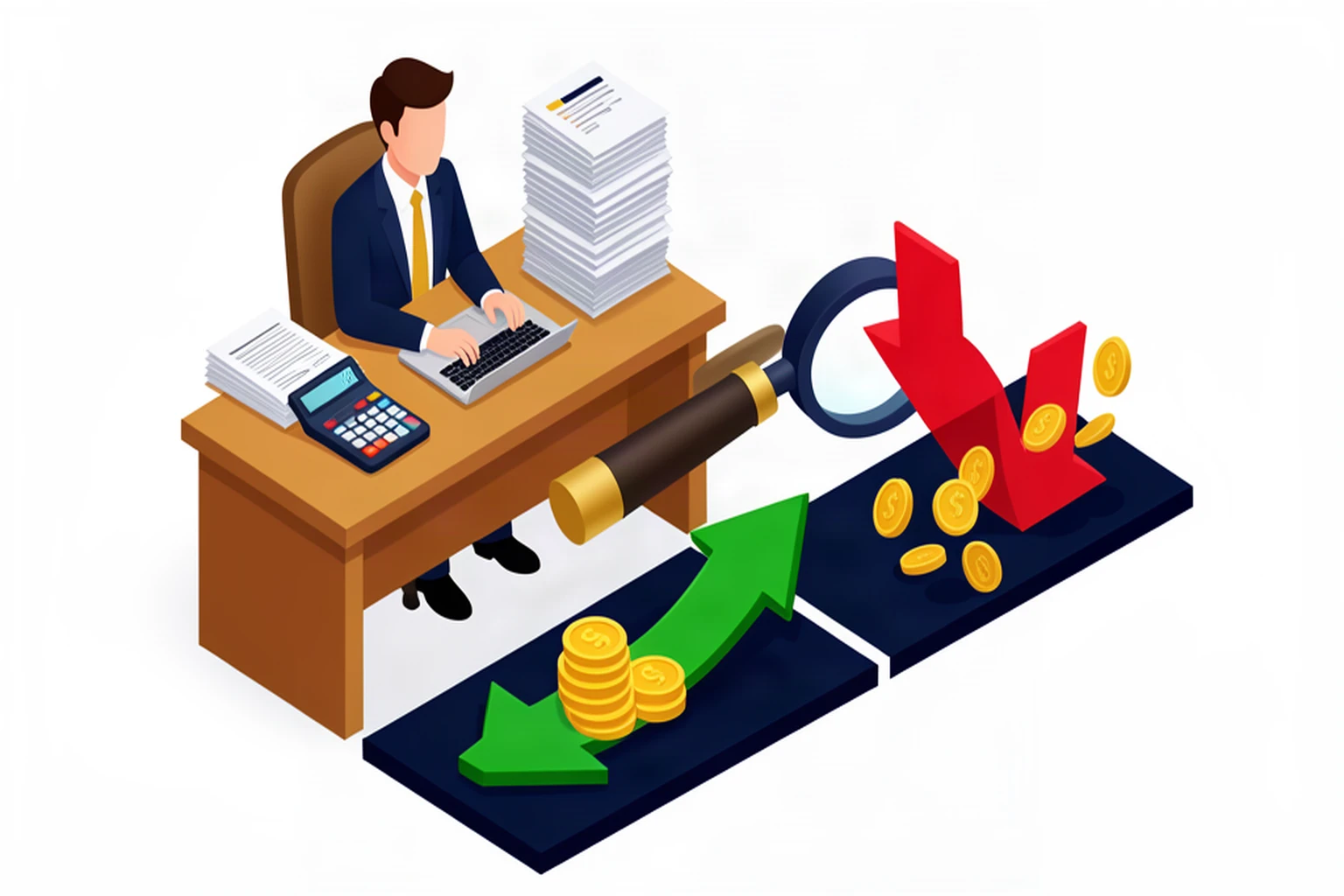
But if you own a business, the conversation changes. The same tool that can wreck your personal finances can also be the lever that builds your empire. The question isn’t “Is debt good or bad?” — it’s “Is this particular debt working for me or against me?”
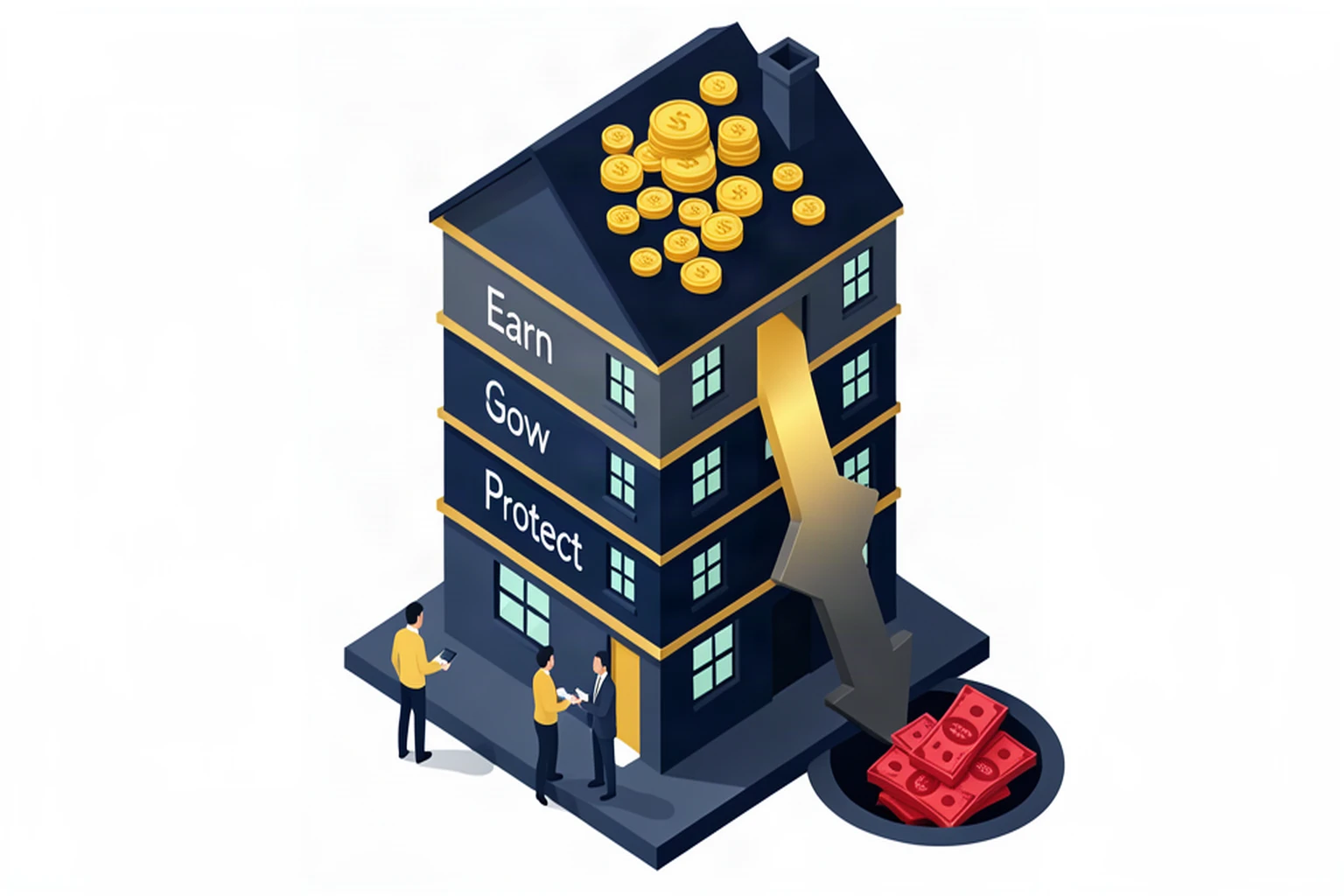
Let’s break that down through the lens of the Financial House: Earn, Save, Grow, and Protect. Debt touches every floor.
The Destroyer That’s Also a Tool
In the 7 Destroyers of Wealth framework, Debt is named as one of the seven — and for good reason. Uncontrolled borrowing is one of the fastest ways to collapse every floor of your Financial House.
It undermines Earn because your revenue goes to service payments instead of building assets. It sabotages Save because interest erodes your cash reserves. It threatens Grow because leveraged losses compound faster than gains. And it destroys Protect because the more you owe, the less margin you have for the unexpected.
But here’s what the simple “debt is bad” advice misses: businesses are engines designed to turn capital into returns. The businesses that grow the fastest are almost always the ones that know how to use other people’s money — bank debt, investor capital, vendor credit — to accelerate their trajectory.
The difference between destructive debt and strategic debt comes down to four questions. Let me walk you through them.
What Makes Debt “Good” for Business Owners
Good debt has one defining characteristic: it pays for itself. Specifically, the asset you acquire with the borrowed money generates enough return to cover the cost of the borrowing — with something left over.
For Canadian business owners, good debt typically takes three forms:
1. Growth Capital. A business line of credit used to finance inventory ahead of your busy season. You borrow $50,000, buy stock, sell it at a margin, repay the line, and keep the profit. The inventory itself secures the loan and generates the repayment — textbook good debt.
2. Real Estate Leverage. A commercial mortgage on your office or retail space. The property appreciates (historically, Canadian real estate has trended up over the long term), your tenants or your own business pay down the mortgage, and the interest is tax-deductible as a business expense. Over time, you build equity with very little of your own capital at risk.
3. Equipment Financing. A loan for machinery, vehicles, or technology that directly increases your business’s productive capacity. A $30,000 piece of equipment that lets you take on $60,000 more in annual revenue is a no-brainer — as long as the payments fit your cash flow.
Notice the pattern: in each case, the money you borrowed goes toward something that produces more value than the debt costs.
The Three Kinds of Bad Debt Every Owner Should Watch For
Bad debt isn’t always obvious. Sometimes it wears a business suit. Here are the three forms that trip up Canadian entrepreneurs most often:
Consumer-Style Debt on Business Cards. Just because you put a purchase on your business credit card doesn’t make it a business expense worth taking on. That “business lunch” at a high-end restaurant, the new office furniture because you’re tired of the old stuff, the marketing course that sounded great at 2 a.m. — if the purchase doesn’t have a measurable return attached, you’re just spending tomorrow’s revenue on today’s wants.
Depreciating Asset Financing. Taking out a seven-year loan for a piece of equipment that will be worth a fraction of its purchase price in three years is a dangerous game. If your revenue dips and you need to sell the asset, you’ll still owe more than it’s worth. This is exactly how personal auto loans wreck people, and it works the same way in business.
Cash Flow Masking Debt. This is the most insidious form. Your business has a slow month, so you draw on your line of credit to cover payroll and rent. Next month is also slow, so you draw more. Before you know it, your operating line is maxed out and you’re making interest-only payments while the principal never shrinks. The debt has stopped being a tool and started being a crutch — and crutches don’t heal the underlying injury.
The Interest Rate Trap: Why 5% and 20% Are Different Galaxies
A common mistake I see business owners make is treating all debt as one big number. They add up what they owe, feel anxious, and decide to “pay everything down” — without distinguishing between a 5% term loan and a 19.99% credit card balance.
This matters enormously because of how interest compounds. A $10,000 balance at 5% costs you about $500 in interest over a year if you pay it down gradually. The same $10,000 at 20% costs you $2,000 — four times as much. Every dollar you send to the high-interest debt first is a dollar earning a guaranteed 20% return (by avoiding that interest charge).
Yet I see business owners do the opposite all the time: they use their cheap, tax-deductible business line of credit to pay off personal credit cards, then max the cards out again. They’ve effectively converted 5% debt into 20% debt while feeling like they accomplished something.
The smarter move is the mirror image: use your high-cost consumer debt to fund a clean separation between business and personal finances, then build an aggressive plan to eliminate the expensive stuff while letting the cheap, productive debt keep working for you.
A Simple Framework: The Debt Decision Matrix
Before you take on any new debt — or decide which existing debt to prioritize — run it through these four questions:
- What am I buying? An asset that produces value, or a consumption item that loses value?
- What’s the interest rate? And does it cost more than the return I expect to earn on the financed purchase?
- Can my cash flow handle the payments? Even if revenue drops 20% for three months?
- What’s the tax treatment? Is the interest deductible against business income, or is it after-tax personal debt?
The answers tell you everything. If you’re buying a productive asset with cheap, tax-deductible debt that fits easily within your cash flow — that’s a green light. If you’re financing consumption at a high after-tax rate with payments that leave no breathing room — hit the brakes.
Red Flags: When Your Debt Starts Turning on You
Even “good” debt can curdle into bad debt if you ignore the warning signs. Watch for these five and treat them as alarms, not annoyances:
You’re using new borrowing to repay old borrowing. One refinance to consolidate is a strategy. A pattern of rolling debts forward every few months is a treadmill — and you’re not getting off.
Payments are creeping past 30% of your gross revenue. Lenders talk about debt-service ratios for a reason. When more than a third of what you bring in goes straight back out to creditors, your business is working for the banks instead of for you.
You don’t know your interest rates off the top of your head. If you can’t name the rate on each of your debts, you’re not managing them — you’re just making minimum payments and hoping. That’s not a strategy, that’s drift.
You’re borrowing for recurring expenses. Inventory and equipment can justify debt. Payroll, utilities, and that weekly supply order cannot. If your line of credit is funding your operating costs month after month, you have a profitability problem wearing a financing disguise.
The word “temporary” keeps appearing. “We’ll just bridge this gap temporarily.” “It’s temporary until the contract lands.” Temporary financing that lasts longer than six months isn’t temporary — it’s structural. And structural debt needs a structural plan, not another bridge.
None of these red flags mean you’re a bad business owner. They mean your debt has quietly changed jobs, and you need to renegotiate its role — before it renegotiates yours.
When Consolidation Actually Makes Sense
Debt consolidation gets a bad name because people use it wrong. Used right, it’s one of the most powerful moves in a business owner’s toolkit.
Consolidation is smart when it does three things: lowers your blended interest rate, reduces your monthly payment without stretching the term into absurdity, and converts variable-rate chaos into fixed-rate certainty. If a consolidation loan does all three, it’s a legitimate financial improvement — not a bailout.
For Canadian business owners, the classic play is moving high-interest consumer debt onto a secured line of credit against home equity or business assets. Rates on secured lines are often a fraction of what credit cards charge, and interest on money borrowed for business purposes is generally deductible. The math can be transformative — but only if you don’t re-accumulate the card balances afterward. That’s the part consolidation can’t fix.
If you’re considering it, run the numbers on the full cost: fees, the new rate, the term, and what happens if the line gets called in. Then apply the same Debt Decision Matrix from earlier. Consolidation is a tool, not a victory — it only wins if the behaviour behind the original debt changes too.
Putting It Together in Your Financial House
In the Financial House framework, debt lives on every floor — but it looks different at each level.
At the Earn level, strategic debt amplifies your income-generating capacity. At the Save level, you want as little debt as possible so your reserves are truly yours. At the Grow level, leverage is how you accelerate — but only if the math works. And at the Protect level, the goal is to ensure you can service your obligations even when things go sideways.
The business owners who build lasting wealth aren’t the ones who avoid debt entirely. They’re the ones who are brutally honest about what kind of debt they’re carrying and why. They use the cheap, productive stuff strategically. They attack the expensive, consumer-style stuff relentlessly. And they never let the convenience of borrowing mask an underlying cash flow problem.
That’s the difference between debt as a destroyer and debt as a tool. The debt itself doesn’t choose which one it is — you do.
Not sure where you stand? Take the 2-minute Financial House Assessment and get your personalized report — free.
Want to go deeper? Check out
Essentials of Money ($50),
The Wake Up Call ($50), or
book a free discovery call.