
Somewhere in the CRA’s databases there is a number attached to your name: $109,000. It grows every January 1. You didn’t have to qualify for it, apply for it, or thank anyone for it. And every dollar it becomes is yours to keep — permanently. Not taxed when it grows. Not taxed when you take it out. Not taxed when you die. In a country that taxes almost everything, this is the one asset the Canada Revenue Agency cannot touch.
So here’s the uncomfortable question: what are you doing with it?
The CRA’s own statistics answer for most of us. Of the 17.7 million Canadians who hold a Tax-Free Savings Account, 94.6% have less than $100,000 in it. Canadians aged 50 to 54 — people who have watched contribution room pile up for nearly two decades — sit on an average balance of just $35,235. That’s 37% of the room they were handed. The government built the most generous tax shelter in the country, and two-thirds of it sits unused, or parked in a GIC earning pocket change while the bank lends it out at seven times the rate.
If you’re a business owner, this isn’t just a missed opportunity. You’re standing in the Grow room of your Financial House with the door wide open, while the strongest tax shelter available to you gathers dust. Here’s what that’s actually costing you — and how to fix it before the year ends.

Wait — the CRA gave you WHAT?
In 2009, the federal government quietly created something almost un-Canadian: a savings account with no tax on the way in, no tax on the way out, and no tax on anything in between. You contribute after-tax dollars — no deduction like an RRSP — and in exchange, every dividend, every capital gain, every dollar of growth inside the account is permanently tax-free. Forever.
Here’s the part most people never learn, because no bank has ever made money telling you it: contribution room accumulates every single year starting the year you turn 18, whether you use it or not. Unused room rolls forward for the rest of your life. The 2026 limit is $7,000, and for anyone eligible since the program began, total room now stands at $109,000. Withdrawals come back as new room the following January 1 — an almost superpower-like feature for business owners whose cash flow looks nothing like a paycheque. We’ll come back to that.
The $108,000 mistake hiding inside Canada’s most boring account
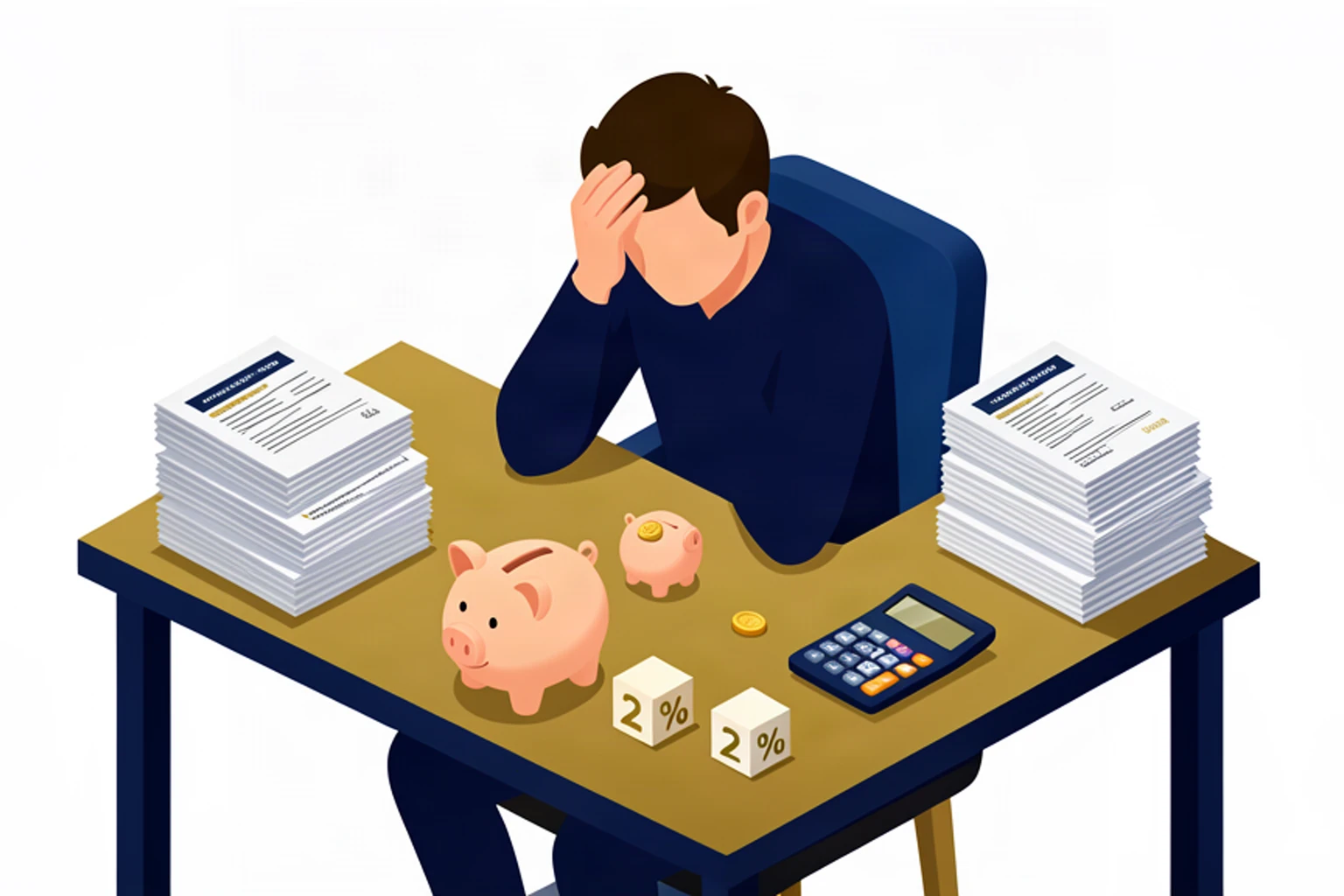
Here is where most people go wrong — and why your “safe” TFSA might be the most expensive account you own. The TFSA is not a savings account. It is the only tax shelter in the country where the growth itself is the prize. Put a low-growth asset in it, and you’ve just paid full tax forever in exchange for 2%.
Run the numbers, because numbers are the only thing that will make you move. $100,000 inside your TFSA, growing at 7% a year for 20 years, compounds to roughly $387,000 — every cent tax-free. The same $100,000 in a regular taxable account, even assuming you minimize the damage with smart selling, ends up closer to $278,000 once the taxman takes his cut of the growth along the way. That is a $108,000 gap between two people who did exactly the same thing — except one knew where to put the money.
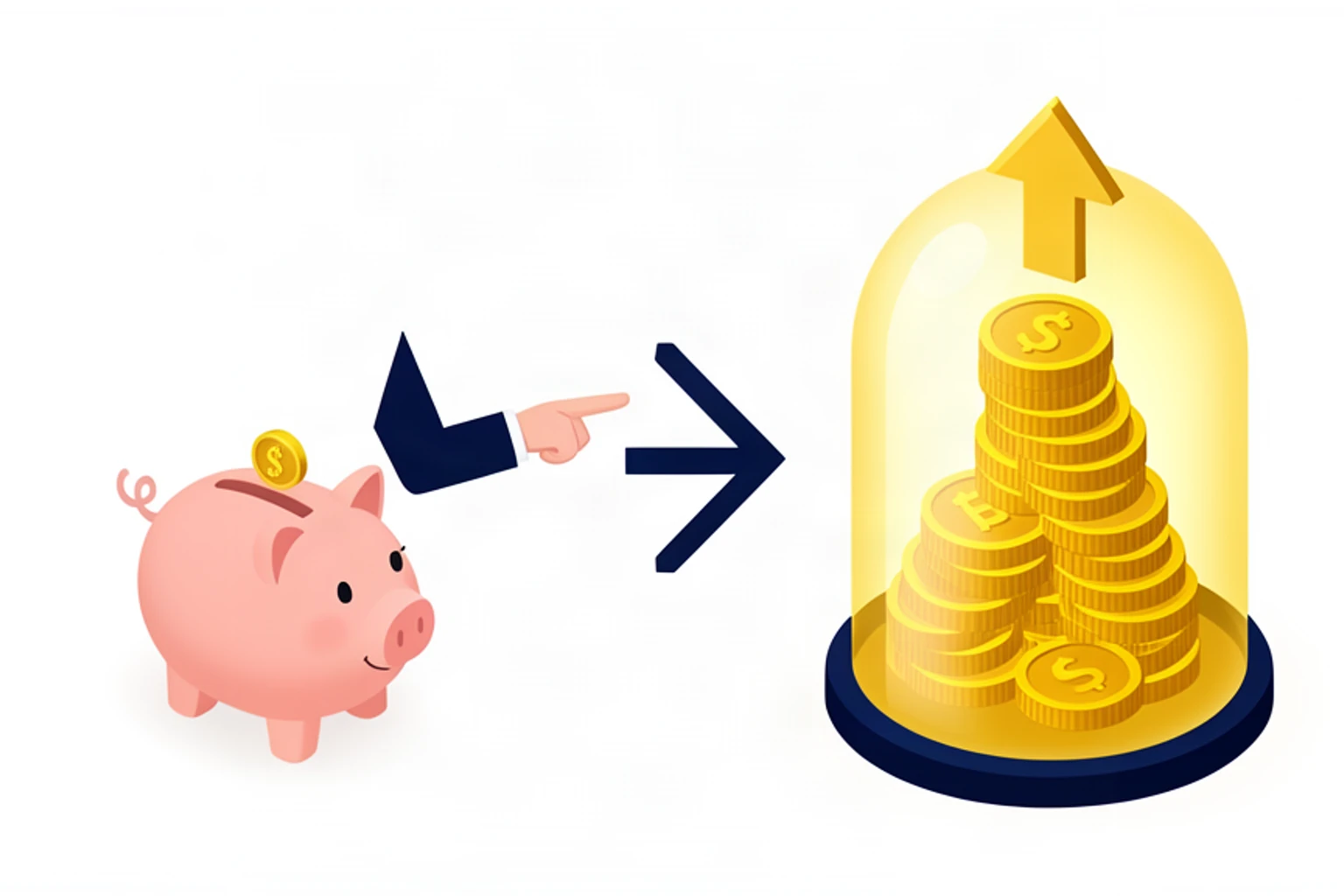
And it gets worse the “safer” you play it. $100,000 in a GIC earning 3.5% inside your TFSA becomes about $199,000 in 20 years. The same money in a boring, diversified ETF earning 7% becomes $387,000. Same account. Same twenty years. An $188,000 difference, entirely tax-free. The GIC isn’t the safe choice — it’s the expensive choice, because it burns the scarcest financial asset you own: tax-free room. The rule is simple: your tax-free room holds your highest expected growth, and your cash belongs outside it.
Why your corporation makes this twice as urgent
Business owners get hit with a double whammy most employees never feel. First, if you pay yourself in dividends instead of salary — and most incorporated owners do — your RRSP room barely grows. RRSP room is 18% of earned income, and dividends don’t count as earned income. That’s the quiet trade-off behind every salary-vs-dividends decision (we broke it down here).
Second, money you leave sitting inside the corporation gets hammered: once passive income inside the company passes $50,000, CRA starts grinding down your small business deduction — the famous “extra” tax that quietly eats 13 cents of every passive dollar. Your TFSA sidesteps both problems. Room is identical whether you take salary or dividends, and taking money out as a shareholder dividend and moving it into a tax-free account stops the corporate-level bleeding cold.
For the founder whose income swings wildly from year to year, there’s a third advantage that never gets talked about: flexibility is a wealth strategy. A TFSA can be withdrawn from any time, tax-free, for a payroll gap, new equipment, or an opportunity. The room comes back the next January 1. No RRIF forced withdrawals at 71, no OAS clawback zone, no penalty for touching your own money. It is the one retirement vehicle that is completely indifferent to the chaos of running a business.
The 5 Methods, tax-sheltered: what actually belongs inside
Now for the fun part. The five wealth-building methods in the Financial House map beautifully onto the TFSA:
- Real Estate: You can’t drop a rental property into a TFSA, but REITs and real estate ETFs are fully qualified — tax-free rent, in ETF form.
- Gold & Silver: Certified bullion coins, including gold Maple Leafs, are qualified investments. Your metal grows tax-free, which is almost unheard of for physical assets (see our gold and silver breakdown).
- Bitcoin: You can’t hold raw crypto inside a TFSA, but bitcoin ETFs (BTCX, BTCC and their cousins) are qualified. Tax-free gains on digital gold, without the custody headache (here’s how business owners use it).
- Business: This is the trap — the shares of your own corporation are a prohibited investment inside a TFSA. We’ll get to the penalty in a second.
- Stocks, ETFs, bonds, GICs: All qualified. The strategy is what matters: growth assets in, cash out.
The 4 ways business owners blow up their TFSA
Before you contribute a single dollar, know the four ways this account eats people alive:
- Owning your own corporation’s shares. The CRA’s prohibited-investment rules are merciless: income and capital gains from a prohibited investment inside your TFSA are hit with a 100% tax — the entire benefit confiscated. Your own company’s shares, or shares of a business you control, are exactly that. Keep your business inside the business.
- Over-contributing. The penalty is 1% per month on the highest excess amount. Even a sloppy $500 mistake costs you $5 a month until it’s fixed, and the CRA does not send gentle reminders. Always check your actual room in CRA My Account before contributing — never guess, and never trust the bank’s website.
- Running a business inside your TFSA. The CRA has re-assessed aggressive day traders, deciding their account activity was “carrying on a business” and taxing the gains. A TFSA is an investing account, not a trading desk. Slow, boring, diversified — that’s the job description.
- The re-contribution trap. Withdraw $30,000 in June to fund a business purchase, and you cannot put that $30,000 back until January 1 of the following year. Do it sooner and you’ve over-contributed — 1% per month, back-dated and painful. This single rule has cost more business owners than any other.
Notice the theme. The account itself is bulletproof. Every mistake around it is a paperwork error, an impatience error, or a greed error — the personal finance Destroyers doing what they always do. All of them are avoidable with ten minutes of care.
The 4-step TFSA reset (do this before December 31)

- Pull your real room. Log into CRA My Account and read your actual TFSA contribution room. Not what you think it is. Not what the bank widget shows. The real number, straight from the source, before you move a dollar.
- Evict the GICs. Anything earning under 4% inside your TFSA is burning tax-free room. Move it into diversified growth assets inside the account — broad-market ETFs, quality dividend payers, REITs, a slice of gold or bitcoin ETF if that fits your plan. Keep short-term cash in a plain high-interest savings account where it belongs.
- Fund it like a bill. If you pay yourself a year-end dividend, route a chunk into your TFSA the same week you issue it. Automate it. The people who max this account out every year don’t have more willpower — they have a system, and the system runs whether they’re thinking about it or not.
- Use it hard. This is the one tax shelter that rewards you for touching it. Business cash-flow crunch? Withdraw. Slow season? Withdraw. The room returns January 1, and your future self keeps every dollar of growth. Liquidity is a wealth strategy for an entrepreneur, and this is the only place the government hands it to you tax-free.
And if you’re over 40 with retained earnings piling up inside your corporation, there’s a bigger question you should ask before you max anything: whether an Individual Pension Plan quietly beats your RRSP. For an owner in your position, the IPP routinely allows two to three times the annual contribution room — the difference adds up to six figures over a decade (here’s the full math).
The room you’re not using is the tax plan you’re not having
Every January 1, the CRA quietly tops up your tax-free room and moves on. No email. No reminder. No one at your bank is paid to make you rich — they’re paid to sell you products. The $109,000 door stays open either way. The only question is whether you walk through it this year, or leave the Grow room of your Financial House empty for another twelve months while the numbers above keep compounding against you.
Not sure where the 5 Methods fit inside your tax-free room, or whether your next dollar belongs in a TFSA, an RRSP, or your corporation? That’s exactly the kind of decision the Financial House framework was built to settle.
Not sure where you stand? Take the 2-minute Financial House Assessment and get your personalized report — free.
Want to go deeper? Check out Essentials of Money ($50), The Wake Up Call ($50), or book a free discovery call.