
Let’s talk about the elephant in the boardroom: debt.
If you own a business in Canada, you’ve probably been told that debt is just the cost of doing business. A line of credit for inventory here, a credit card for marketing there, a loan to cover payroll through a slow stretch. It all feels manageable — right up until the day it doesn’t. The interest piles up, the minimum payments get heavier, and no matter how many hours you pour in, your bank account never seems to move forward.
Here’s the truth nobody tells you at the networking events: debt is one of the Seven Destroyers of Wealth — and it’s the sneakiest one of all, because it never announces itself. It just quietly eats your profits while you’re busy running the business.
The good news? Debt is also the destroyer you can fight back against the fastest. You don’t need a miracle. You need a plan. Here’s how to build one.

Debt Is One of the Seven Destroyers of Wealth
Most business owners I meet don’t think of themselves as “in debt.” They have a line of credit for inventory. They put marketing on a card and pay it off most months. They financed new equipment because it made sense on paper. None of it feels like a problem — until you actually add it all up.
And when you do, something uncomfortable happens: you realize a huge slice of your hard-earned revenue is leaving the building every single month, and none of it is building anything for you. It’s just feeding interest.
Think about your business through the Financial House framework — Earn, Save, Grow, Protect. Earn is your revenue engine, and most owners are great at it. Save is your buffer, Grow is your investing, Protect is your insurance and estate planning. But here’s the pattern I see over and over: debt is what’s blocking the door between Save and Grow. You can’t build the Grow room of your house while the debt room is on fire.
Every dollar you send to a lender is a dollar that can’t do one of three jobs for you: grow in an investment, protect you in an emergency, or buy back your time. That’s the real cost of debt — not the interest rate, but the opportunity cost. Money that’s working for the bank is money that isn’t working for you.
Know Which Debt Is Eating You Alive
Not all debt is created equal. Before you start attacking, sort what you owe into three buckets:
- The predators: credit cards, store cards, anything north of about 10–20% interest. These are emergencies. They need to die first.
- The middle ground: unsecured lines of credit, personal loans, equipment financing. They’re not trying to kill you, but they’re charging you a healthy tax for the privilege of borrowing.
- The tame ones: your mortgage, low-rate business loans. These are the debts you can afford to carry while you invest elsewhere.
Here’s the mistake most owners make: they treat all debt the same way and pay a little extra everywhere. That’s like trying to put out five small fires by throwing a cup of water on each one. Nothing goes out.
Your credit card at 22% and your mortgage at 4.5% are not the same animal. One is quietly draining thousands from you every year; the other is a cost of doing life. Kill the predators first, and do it with everything you’ve got.
The Avalanche and the Snowball: Two Ways That Actually Work

There are two proven ways to pay down debt, and you’ve probably heard of both. The difference is in how you choose which debt to throw extra money at.
The avalanche method is the mathematician’s choice: pay the minimum on everything, then aim every extra dollar at the debt with the highest interest rate. When that one’s gone, roll its payment into the next-highest, and so on. It saves you the most money in interest, and it’s the fastest route to debt-free.
The snowball method is the psychologist’s choice: pay the minimum on everything, then aim every extra dollar at the smallest balance first, regardless of the rate. When you knock out a small debt fast, you get a win — and wins keep you going. The momentum carries you through the bigger ones.
Which one is right for a business owner? The one you’ll actually stick with. You’re running a company; you don’t have spare willpower floating around. If you need quick wins to stay motivated, snowball it. If you can trust the math and stay disciplined, avalanche it. Just pick one and start — the perfect plan you never begin is worth less than a good plan you actually finish.
The Business Owner’s 5-Step Debt Payoff Plan
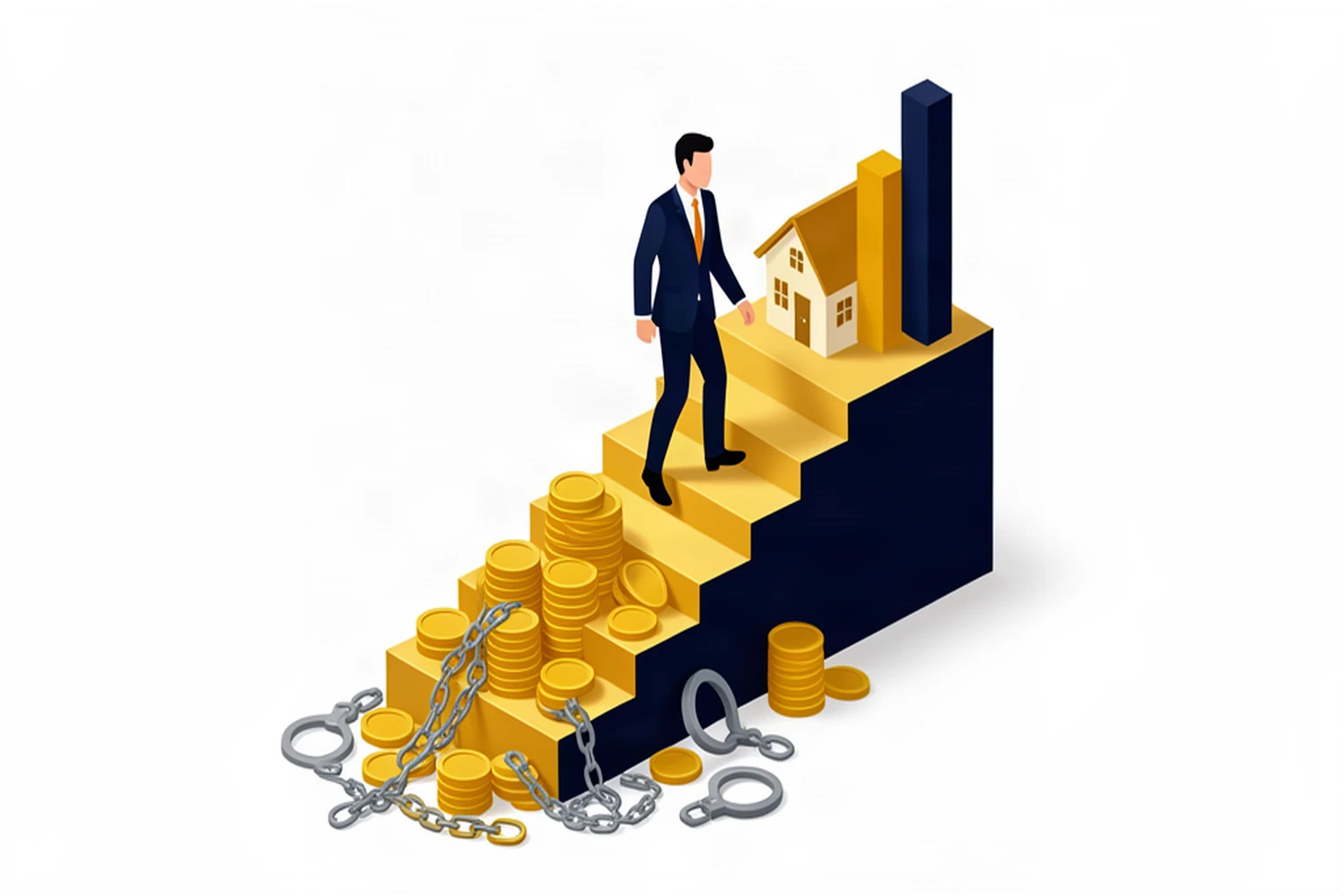
Strategy is great, but you need a sequence. Here’s the five-step plan I walk clients through:
- Get the real number. List every debt — balance, rate, minimum payment. No guessing. Most owners are shocked by what the actual total looks like on one page.
- Build a tiny buffer first. Before you go all-in on payments, set aside even $1,000–$2,000. I know it feels backwards, but it stops you from reaching for the credit card the next time the van breaks down. Paying off debt while adding new debt is a treadmill, not progress.
- Pick your method and automate it. Choose avalanche or snowball, then set up an automatic extra payment so you don’t have to remember to do it. Remember: this has to run on autopilot, because your brain is busy running a business.
- Redirect every windfall. Tax refunds, GST/HST refunds, that one big invoice that finally landed, a government grant — all of it goes to the debt you’re attacking. Windfalls are how owners make real dents; monthly minimums are how they stay stuck.
- Track it visibly. Put the number on a whiteboard or a spreadsheet you actually look at. Watching the balance drop is the fuel that keeps the plan alive.
Don’t Strip Your Business Bare to Pay Debt
Here’s the part most debt advice gets wrong: they tell you to sacrifice everything, and for a business owner that’s dangerous advice. If you drain your business of cash to pay down debt, one slow month can put you right back on the credit card — and worse off than before.
You can’t pay your way out of debt with a business that’s running on fumes. That’s why the buffer in step two matters, and it’s why building a proper business cash reserve should run alongside your payoff plan, not after it. Think of it as the fire extinguisher you install while you’re putting out the fire.
And while you’re at it, make sure you’re paying yourself properly. Owners who skip their own paycheque to service debt burn out fast — and a burned-out owner is a revenue problem, which becomes a debt problem all over again. A steady, modest paycheque keeps you in the game long enough to win it.
What Happens After the Debt Is Gone
Here’s where it gets fun. The moment that last balance hits zero, you don’t stop the payments — you redirect them. That avalanche payment you were sending to the bank now gets to work for you.
This is when your Financial House finally gets its Grow room built. Max out your TFSA and RRSP. Fund your emergency reserve properly. And if you want to build wealth like the wealthy, explore the Five Methods of wealth building: real estate, insurance, gold and silver, bitcoin, and business. You now have cash flow that can actually move the needle in any of them.
You’ll also notice something else: your risk profile changes. A business owner with no consumer debt makes different decisions — better ones. You can turn down bad deals. You can negotiate from strength. You can hold out for the client, the contract, or the opportunity that actually fits. Debt is leverage in good times and a leash in bad ones, and being off the leash changes everything.
And when borrowing is the right move again — because sometimes it is — you’ll do it on your terms. That’s the difference between good debt and bad debt: good debt builds an asset, bad debt just feeds a habit. Once you’ve been through a real payoff plan, you can tell the difference at a glance.
Start With One Number
You don’t need to fix your whole financial life this week. You need one number: your total debt, written down, with the rates next to it. That single page is where every debt-free story starts.
Debt is one of the Seven Destroyers of Wealth — but destroyers only win when you don’t see them coming. Now you do. The question isn’t whether you can pay it off. It’s whether you’ll start today, or let it keep quietly eating next year’s profits too.
Not sure where you stand? Take the 2-minute Financial House Assessment and get your personalized report — free.
Want to go deeper? Check out Essentials of Money ($50), The Wake Up Call ($50), or book a free discovery call.