

The envelope is beige. Official. The return address is in Ottawa, and the words “Canada Revenue Agency” sit in the corner like a verdict before you’ve even opened it.
If you’ve run a business for any length of time, you know the feeling. Your stomach drops. Your mind races through every deduction, every estimate, every half-remembered receipt from two tax seasons ago. And then the question that keeps owners up at night: what do they want?
Here’s the truth nobody tells you: the CRA does not audit randomly. It audits patterns. Most business owners who get that letter are not crooks and haven’t done anything malicious — they simply tripped a pattern the CRA has seen a thousand times before, and they weren’t ready when the doorbell rang.
The good news? If you understand the patterns and build your financial house so the records are solid, you can go from “audit nightmare” to “audit-proof.” And if that beige envelope ever does arrive, you’ll be ready in an afternoon — not a panic.
Why the CRA Comes Knocking: The Patterns That Trigger a Review
The CRA’s computers score every tax return. Most files never get a second look. But a handful of patterns push your file into the pile for a human to review — and Canadian business owners trip these far more often than they realize. Here are the five most common:
- Your lifestyle doesn’t match your reported income. New truck, bigger house, kids in private school — but you reported $40,000. The CRA calls this a “net worth assessment,” and it’s one of the most common ways owners get caught. The numbers don’t have to line up perfectly, but a yawning gap is a giant red flag.
- Consistent losses. A business that loses money year after year is either struggling or quietly subsidizing a lifestyle. The CRA knows the difference, and after a few consecutive loss years it starts asking questions.
- Round numbers everywhere. Meals at $40 exactly, gas at $50 exactly, “miscellaneous” at $2,000. Real businesses don’t produce round numbers; invented ones do. It’s a small tell that adds up.
- You’re below your industry’s benchmarks. The CRA keeps detailed statistics on what businesses like yours should earn. A restaurant reporting food costs that make no sense, or a contractor earning far below peers in the same trade — the computer notices.
- Large unexplained deposits. Cash-heavy businesses are the most common audit targets, because cash leaves no automatic paper trail. A deposit the CRA can’t match to a sale is a question waiting to be asked.
None of these make you a bad person or a fraudster. But each one is a reason a human might take a second look — and forewarned is forearmed.
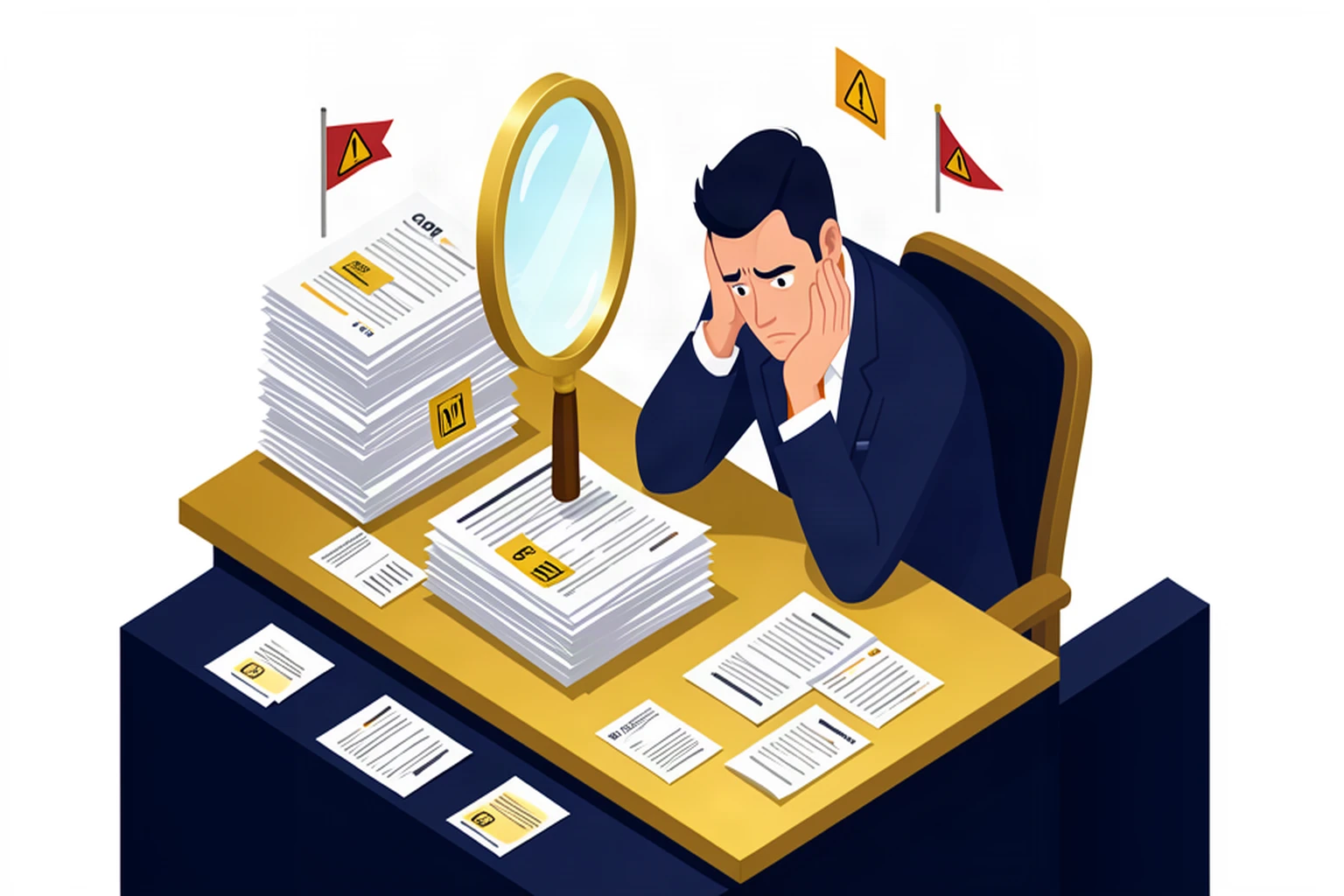
Your Paper Trail Is Your Defense
Here’s the reality of a CRA audit: it’s not really about whether you did something wrong. It’s about whether you can prove you didn’t. The CRA doesn’t audit your intentions — it audits your paper trail. And the owner with clean, organized records wins the argument every single time.
You are required to keep your books and records for six years from the end of the tax year. For most owners, that means seven tax seasons sitting in a drawer or on a drive. And it’s not just receipts — the CRA wants the story behind the numbers: invoices, contracts, bank and credit card statements, mileage logs, and the notes that tie them together.
The three records most owners are missing:
- A proper mileage log. If you claim vehicle expenses, the CRA wants a contemporaneous log — written as you go, not reconstructed in a panic in April.
- A source document for every expense. A receipt that just says “payment received” isn’t enough. The CRA wants to know what it was for and that it relates to earning income.
- A clear separation between business and personal. The owners who breeze through audits are the ones where every transaction has an obvious home.
If record-keeping has been a weak spot, start here: Bookkeeping for Business Owners: The Simple System That Keeps Your Finances Clean. It’s the same system I walk my own clients through, and it turns tax time from a month of dread into an afternoon.

How You Pay Yourself Matters More Than You Think
Owners get audited less for what they earn and more for how the money moves. Two patterns account for a disproportionate share of owner audits.
The first is the shareholder loan. If you’re incorporated and you take money out of the company that isn’t salary or dividends, that’s a shareholder loan — and if it isn’t repaid within a year, the CRA treats it as income. It’s one of the most common audit findings for Canadian business owners, and most of the time it’s an innocent accounting slip that costs thousands in unexpected tax.
The second is inconsistency between salary and dividends. The CRA watches for owners who reclassify income after the fact to dodge tax. There’s nothing wrong with paying yourself a mix of salary and dividends — it’s a completely legitimate strategy — but the mix should reflect a real business decision, not an after-the-fact reshuffle. If you want to understand how to set that mix up properly, my post on salary vs. dividends walks through the whole decision.
The rule of thumb: every dollar that moves between you and your company should have a clear, documentable reason. If you can explain it in one sentence to a stranger, you’re fine. If you can’t, fix that before the letter arrives.
What Actually Happens During an Audit
An audit sounds like an interrogation, but it’s usually far more boring — and knowing that is half the battle. Here’s the typical flow:
- The letter. The CRA sends a written notice explaining which period is under review and what records they want. You typically have 30 days to respond.
- The books-and-records review. Most business audits are “desk audits” — the CRA reviews the documents you provide, by mail or at your place. A “field audit” means an officer visits your premises.
- The questions. The auditor asks about specific items. Answer what’s asked. Keep it factual. Don’t volunteer the story of your life.
- The reassessment. If they find an adjustment, you get a notice of reassessment with the new tax, interest, and penalties. You have the right to object within 90 days, and you can appeal further to the Tax Court of Canada.
The whole process usually focuses on specific items — a year, an expense category, a single issue — not your entire financial history. And remember: the CRA is not the police. This is an administrative process about whether the numbers are right.
What to Do If the Letter Arrives
First: don’t panic, and don’t ignore it. The owners who get into real trouble are the ones who bury the letter in a drawer and hope it goes away. It doesn’t. The deadline passes, the CRA reassesses based on what it has, and suddenly you’re defending a position instead of presenting one.
Here’s the playbook:
- Confirm the deadline and put it in your calendar. Most notices give you 30 days. Missing it is the single most expensive mistake you can make.
- Call your accountant before you respond to anything. Not your cousin who “does taxes” — an accountant who has been through audits and knows what to hand over and what to hold back.
- Gather exactly what was asked, no more, no less. Handing over more documents than requested just gives the auditor more to look at.
- Keep every response in writing. If you have a phone call, follow it up with an email summarizing what was discussed.
- Know your rights. You can have someone represent you, you can request an extension, and you can object to the result. Exercising those rights doesn’t make you look guilty.
And if you suspect you’ve genuinely made a mistake — a missed source of income, an aggressive deduction — there’s a better option than waiting to be caught: the Voluntary Disclosures Program. If you come forward before the CRA contacts you, you can often get penalty relief and reduced interest. It’s the difference between fixing a problem on your terms and having it fixed for you.

Audit-Proofing Is Just Another Room in the Financial House
Remember the Financial House — Earn, Save, Grow, Protect? Most owners spend all their energy on Earn and Grow, making money and investing it, and treat Protect as an afterthought. But protection isn’t just insurance and estate plans. It’s the boring stuff too: the records that prove your story, the clean separation between business and personal, the systems that make tax time take an afternoon instead of a month.
Think about the 7 Destroyers of Wealth. One of the sneakiest isn’t a market crash or a bad investment — it’s the tax disaster that comes from being unprepared: penalties, interest, reassessments, and the accounting and legal fees to clean it all up. An audit you’re not ready for can quietly set you back years.
You don’t need to be paranoid. You need to be prepared. Set up the records now, pay yourself deliberately, and keep business and personal clean. Do that, and the beige envelope loses most of its power — because when it arrives, you’ll already have the answer.
Not sure where you stand? Take the 2-minute Financial House Assessment and get your personalized report — free.
Want to go deeper? Check out Essentials of Money ($50), The Wake Up Call ($50), or book a free discovery call.