
Ask an employee how their retirement is funded and they can usually answer: pension here, group RRSP there, maybe a matching program. Ask most business owners the same question and you get a version of the same vague answer: “I’ll sell the business someday.”
That “someday” is the problem. Not because selling your business is a bad idea — it can be a great one. But because a plan that lives entirely in your head, with no number attached to it, isn’t a plan. It’s a hope. And hope is a terrible retirement strategy.
Here’s the good news: calculating your retirement number as a business owner isn’t complicated. It takes about fifteen minutes, a few honest estimates, and a willingness to look at your future on paper instead of in your imagination. Let me walk you through it.
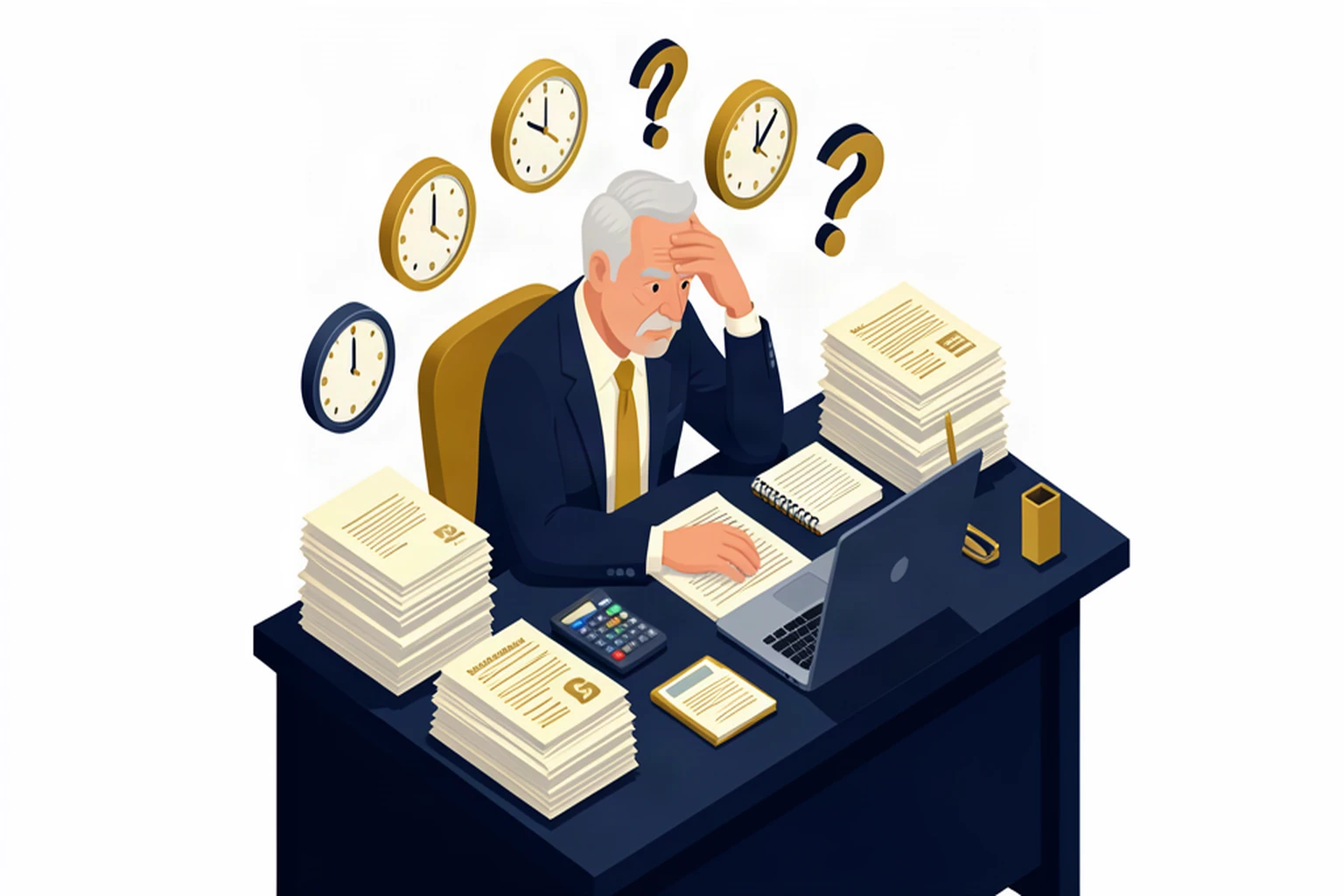
You Don’t Have a Pension. You Have a Business. That Changes Everything.
Here’s what employees get that you don’t: someone else systematically putting money aside for them, every single paycheque, for thirty or forty years. Their employer deducts, their pension plan grows, and at sixty-five a predictable cheque shows up. It’s not glamorous, but it’s automatic.
You built your own system — but it has a blind spot. Your business is your biggest asset and, at the same time, your biggest concentration of risk. It pays you handsomely while you work, and you’ve poured years of effort into making it valuable. The question nobody asks until it’s urgent is: what does the business pay you after you stop working?
A sale sounds like the answer, but sales are never guaranteed. They depend on timing, on markets, on a buyer appearing when you’re ready, on the business running fine without you at the wheel. Plenty of owners discover at fifty-eight that their “retirement plan” was really just a job they haven’t figured out how to leave yet. That’s why we start with a number instead of a story.
The Number Starts With a Life, Not a Dollar Figure
Most people do this backwards. They start with a dollar figure — “I need two million” — and work toward it with no idea why. Then, when they hit the number, they’re not actually sure they can retire, because they never decided what retirement was supposed to feel like.
So flip it. Describe a week in your retirement. Where are you living? What does a Tuesday look like? Are you traveling, volunteering, spending more time with grandkids, working on the business you always wanted to build? Be honest about the expenses that come with that life — including the ones you’d rather not think about, like health care costs as you age.
Now put a yearly price tag on it. A simple rule of thumb: most people need roughly 70–80% of their pre-retirement income to maintain their lifestyle. Business owners often underestimate this, because they’re used to reinvesting a big chunk of what they earn. Your lifestyle in retirement is probably not a lean startup. Give it a fair number.
The Simple Math: Annual Spending × 25
Once you have your annual retirement spending, the classic rule is beautifully simple: multiply it by 25. That’s your retirement number.
Here’s where the 25 comes from. Financial research (the famous “4% rule,” born from the Trinity Study) found that if you withdraw 4% of your portfolio in year one and adjust for inflation after that, your money has a very strong chance of lasting thirty years or more. Four percent of your portfolio is the same as one twenty-fifth of it — so $80,000 a year of spending means $2,000,000 saved ($80,000 × 25). Want extra cushion? Multiply by 30 instead.
If that number makes you swallow hard, you’re in good company — most owners do. But here’s the part people skip: you are not starting from zero, and you are not carrying the whole load alone. Two things you already have will cover part of it.
CPP and OAS: The Floor Most Owners Forget
Because you’ve been running a business, you may have been paying yourself a modest salary for years — which means your Canada Pension Plan benefit may be smaller than you’d like. That’s not a reason to panic; it’s a reason to check. Your CPP statement of contributions shows your projected benefit at 60, 65, and 70. Delaying CPP to 70 boosts it by a significant percentage, and for many owners that’s one of the smartest “guaranteed income” decisions available.
Old Age Security is the second piece of the floor. It kicks in at 65 (with a modest top-up now available at 75), and it gets clawed back at higher incomes — so it’s a bigger help to some owners than others. Still, for a typical couple, CPP and OAS together can cover a meaningful chunk of a modest retirement budget.
Here’s the exercise: subtract your government floor from your target spending. If you need $80,000 a year and CPP/OAS covers $28,000 of it, your investments only need to produce $52,000 — which means a portfolio of about $1.3 million instead of $2 million. See how that works? The number you thought was impossible just got smaller, because you finally did the math instead of guessing.

Fill the Gap With the Right Buckets
Now you know the gap. The next question is where the money that fills it should live — because in Canada, the same dollar grows very differently depending on the container it’s in.
This is where the Financial House framework does its best work. The Save floor and the Grow walls of your house need to be built out of tax-smart materials, or the CRA takes a cut of everything you build. In order of tax efficiency for most owners: TFSA first (growth is tax-free forever, and it doesn’t count against OAS clawback), RRSP next (deduction now, tax later, and you can defer to a lower bracket in retirement), and corporate investments after that (powerful long-term tax deferral, but with more rules — a holding company can be a great tool or a trap, depending on your situation).
If you’ve never worked through the TFSA versus RRSP question for your specific situation, that decision alone can be worth tens of thousands of dollars over a decade. I wrote a full breakdown for business owners — TFSA vs RRSP for Canadian Business Owners: How to Decide Where Your Money Belongs — so you can stop guessing and start stacking.
Grow the Gap With the 5 Methods — Not Just the Business Sale
Here’s the mistake I see most often: an owner’s entire retirement plan is the business itself. All the chips, one table. If the sale goes well, they’re set. If it doesn’t — if the market shifts, if a key person leaves, if the industry changes — the retirement plan shifts with it.
The fix isn’t to abandon the business as an asset. It’s to stop treating it as your only asset. The 5 Methods of wealth building give you a framework for spreading the risk: Real Estate (income properties that can produce cash flow in retirement), Insurance (permanent life policies that can act like a tax-efficient fixed-income bucket), Gold & Silver (a hedge that has protected wealth through every currency crisis in history), Bitcoin (a small, disciplined position in the newest asset class), and Business (the engine that built everything — and the one you’re trying to exit).
You don’t need all five. You need to stop relying on one. Even a modest monthly amount diverted into a second and third method — alongside your TFSA and RRSP — starts building the bridge between the life you have and the one you want. And when the time does come to sell, you’ll be negotiating from strength, not from desperation.
If a sale is part of your plan, make sure you’ve thought it through properly: I covered the full process in Selling Your Business for Retirement: The Exit Plan Every Canadian Business Owner Needs. It pairs perfectly with the number you’re building today — one post for the destination, one for the journey.
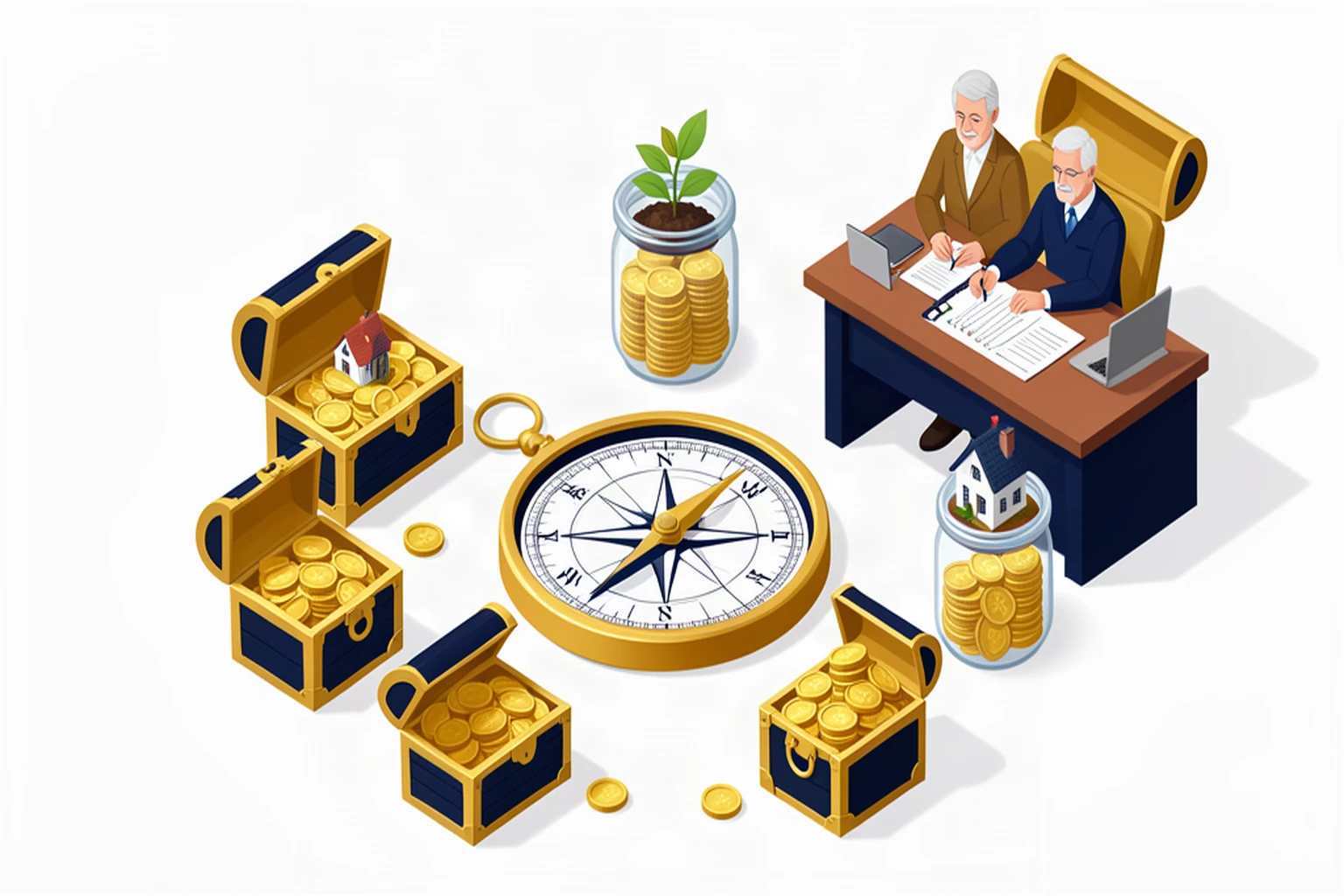
The 15-Minute Annual Review That Keeps You on Track
Here’s the part that turns a calculation into a retirement: a habit. Your number isn’t a one-time figure. Your spending changes, CPP estimates update, investment returns land, and your business evolves. Once a year — pick a date, put it in the calendar, treat it like a board meeting — spend fifteen minutes on your retirement number:
- Re-estimate your annual retirement spending (has your vision changed?)
- Re-check your CPP and OAS projections (service Canada updates these yearly)
- Review your buckets: is the money in the right containers, tax-wise?
- Check each of your growth methods — did any of them run away from the others? Rebalance gently.
That’s it. Fifteen minutes, once a year. Not a complicated spreadsheet, not a daily obsession — just a regular check-in that keeps the bridge between where you are and where you’re going in good repair. Consistency beats intensity every time, and this is the system that makes “someday” into a date on the calendar.
You don’t need a perfect number to start. You need a direction, a rough figure, and the willingness to look at it honestly once a year. That’s how business owners who actually retire do it — not with a crystal ball, but with arithmetic and a calendar.
If you’d like a second pair of eyes on your number — or help building the bridge between your business and your retirement — that’s exactly the kind of conversation I love having. Start with your number, and we’ll take it from there.
Not sure where you stand? Take the 2-minute Financial House Assessment and get your personalized report — free.
Want to go deeper? Check out Essentials of Money ($50), The Wake Up Call ($50), or book a free discovery call.