
Your business just had its best year ever. Record revenue. Bigger contracts. For the first time in years, you actually exhaled. So why does your bank account still look like it’s mid-February?
I’ll tell you why: you didn’t get richer — your lifestyle just renegotiated the contract. And over the next 25 years, that quiet upgrade is going to cost you roughly $3.8 million. Nobody warns business owners about this. Not the bank, not your accountant, not your spouse — because you both agreed to it one upgrade at a time.
Here’s the math, so you can’t unsee it. If your lifestyle settles in $60,000 a year above where it used to be — a nicer car lease, a bigger house, two extra vacations, dinners out that stopped being special occasions — and you invested that $60,000 every year instead, compounding at a perfectly ordinary 7% in a balanced portfolio, you’d have almost $3.8 million after 25 years. That’s not a prediction. That’s arithmetic. The question was never whether you can afford the upgrade. The question is what it costs you to give the money away.

You Didn’t Get Richer. Your Baseline Just Moved.
Lifestyle creep has a brilliant disguise: it feels like success. The bigger office. The truck with the LED light bar. The kids’ activities that now cost more than their university tuition will. Every single one felt earned. Every single one quietly rewrote what “normal” means in your house.
Psychologists call it the hedonic treadmill: give anyone a raise and within six months their happiness returns to baseline — and so does their spending, except now it’s $60,000 higher. A $200,000 income doesn’t feel like wealth because you measure against the $210,000 neighbour, and he measures against someone else. It’s the same comparison trap that keeps every rung of the ladder looking one step too low.
And creep doesn’t stop at your personal chequing account. It infects the business too: the bigger office you don’t need yet, the six-person team when two would do, the equipment that gets replaced a year early because the new model is “more professional.” Owners rationalize business-side creep as investment, and sometimes it is. But most of the time it’s the same treadmill wearing a suit — new fixed costs that require more revenue just to keep the machine idling.
Here’s what nobody says out loud: lifestyle creep is one of the 7 Destroyers of Wealth — the quiet one. The others announce themselves. Debt keeps you up at night. Fear freezes you. Greed makes you chase shiny objects. But lifestyle creep smiles at you from the driveway of the house you couldn’t have afforded three years ago. It’s the only destroyer that feels like a reward while it’s draining you.
Why Winning Is the Most Dangerous Time for Your Money
Most business owners are excellent at surviving bad years. You’ve cut costs, you’ve pivoted, you’ve done the feast-and-famine shuffle that smooths your paycheque when revenue isn’t. You’re disciplined in the valley. Here’s the uncomfortable truth: the money doesn’t escape in the bad years. It escapes in the good ones.
The danger is that fixed costs climb with revenue. The lease is bigger because you can afford it. The house moves because you “deserve it.” Your life becomes a company with permanently rising overhead — golden handcuffs that you built with your own two hands. Eighteen months after the best year ever, the business now has to produce more just for you to stand still. You feel rich the day you sign, and trapped shortly after.
Studies of lottery winners show the same pattern in its purest form: a shock of money, a burst of upgrades, and within a few years most are back where they started — because they upgraded the lifestyle instead of the balance sheet. You don’t need to win the lottery to own the same blind spot. A record year is its own form of winning, and it does the same thing to your judgment.
5 Early-Warning Signs You’re Already in the Creep Zone
Lifestyle creep never announces itself, so you have to audit for it. Answer honestly:
- You can’t remember the last time you said “we can’t afford that.” Not “we don’t want it” — can’t. If that phrase has left your vocabulary, your spending has detached from your values.
- Your savings rate is flat while your revenue is up. This is the single most reliable tell. Revenue grew 30%? Your investing should have grown with it, not stayed the same dollar amount.
- You’re financing things you could buy outright. Leases, payment plans, “0% for 60 months.” The payment exists so the price stops hurting. It shouldn’t hurt less — it should hurt more.
- Your fixed costs have tripled, but you can’t name one that changed your life. The subscriptions, the club memberships, the parking spot, the software you don’t use. Death by a thousand autopays.
- You work more now than when you earned less. The classic sign that the lifestyle is now the boss. The thing you built to buy freedom is quietly billing you for the cage.
If you hit three or more, creep isn’t coming for you. It’s already living in your house, rent-free.
The One-Percent Rule: Enjoy the Raise Without Giving It All Back
Consider two owners, same revenue, same province, same everything except one habit. Owner A upgrades with every record month: new truck, reno, fancier club. Owner B runs the One-Percent Rule: half of every raise goes to Save and Grow before it’s ever seen. Ten years later, A is working harder to feed a lifestyle that no longer impresses anyone, including him. B’s investments are quietly producing more annual income than A’s entire lifestyle upgrade cost. Same money, different trajectory — and the only difference was the order the money was spent in.
The fix is not frugality. Deprivation always collapses. The fix is frictionless automation, because money behaves like water: it flows to the path of least resistance. If your income lands in chequing and then something gets invested, the shopping cart wins most of the time. That’s not a character flaw — it’s gravity.
So build a wall between the money you see and the money you keep. Put every earning through the Financial House in order: Earn → Save → Grow → Protect. The moment income rises, raise your automatic transfer by a fixed percentage on the same day — before the money ever touches a spending account. When the next raise or record month lands, 50% of it goes to Save and Grow automatically. You can spend the other half guilt-free, because your wealth didn’t take the hit.
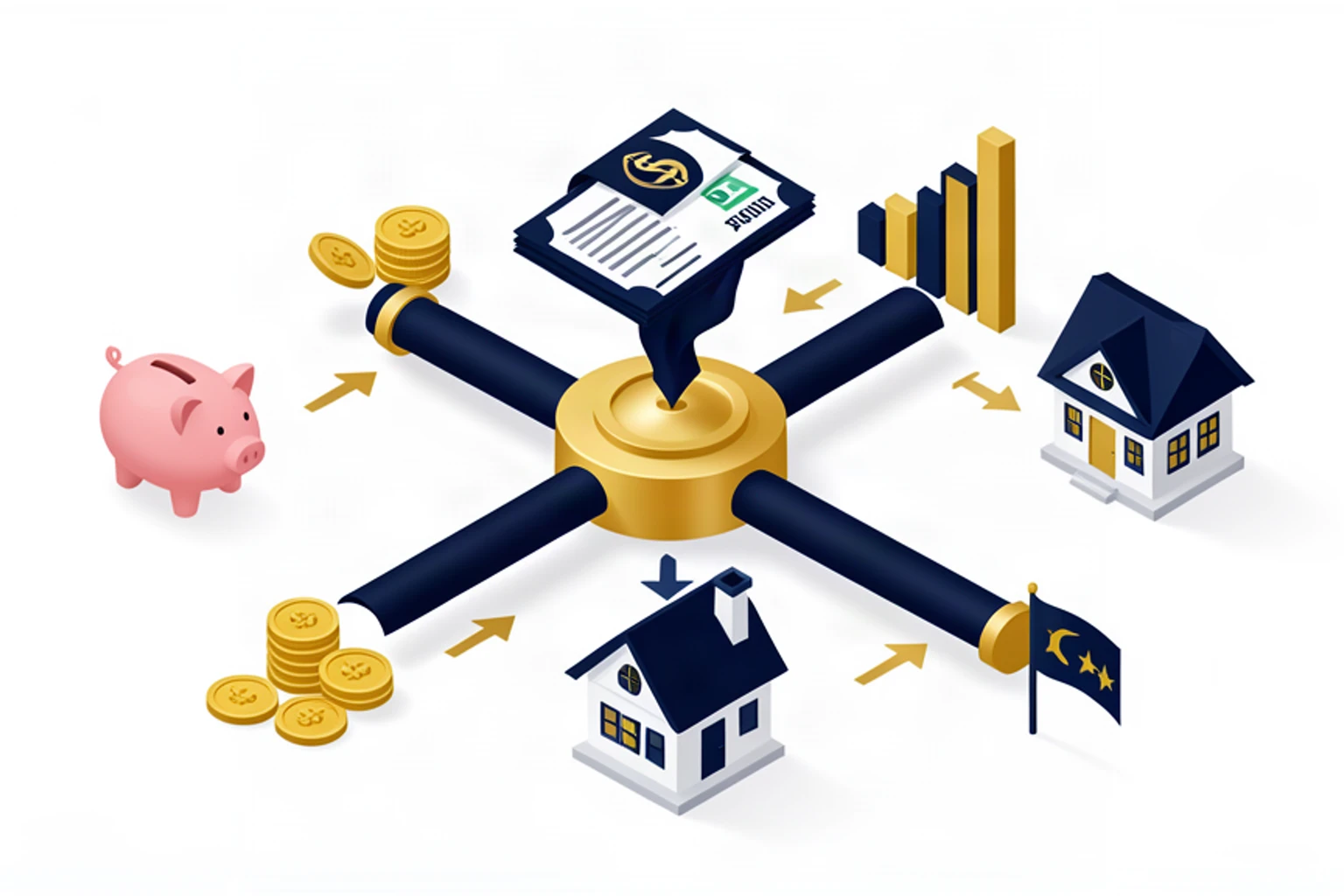
The research here is both brutal and freeing: if you see the money, you’ll spend it; if the money never arrives, you won’t miss it. The owners who retire rich didn’t out-willpower the world. They out-numbered it. The transfer happened before the temptation existed. That’s not discipline — that’s design, and design always beats discipline.
Feed the House First: Where Upgraded Dollars Actually Belong
Here’s the reframe that changes everything: every upgrade is a choice between something that depreciates and something that compounds. That truck loses 40% of its value in three years. The same money in your TFSA grows tax-free for the rest of your life. You already know which one your business would call a good investment.
Run the numbers the way you’d run any business decision. Save is the foundation of the house — the emergency reserves that mean the business owns you instead of the other way around. Grow is the second floor — put the upgrade money to work in your TFSA and RRSP room and beyond, and let it build toward the retirement number you actually need, not the one the dealership suggests. Protect is the roof — because the whole point of all this is that your family is covered, not just your ego.
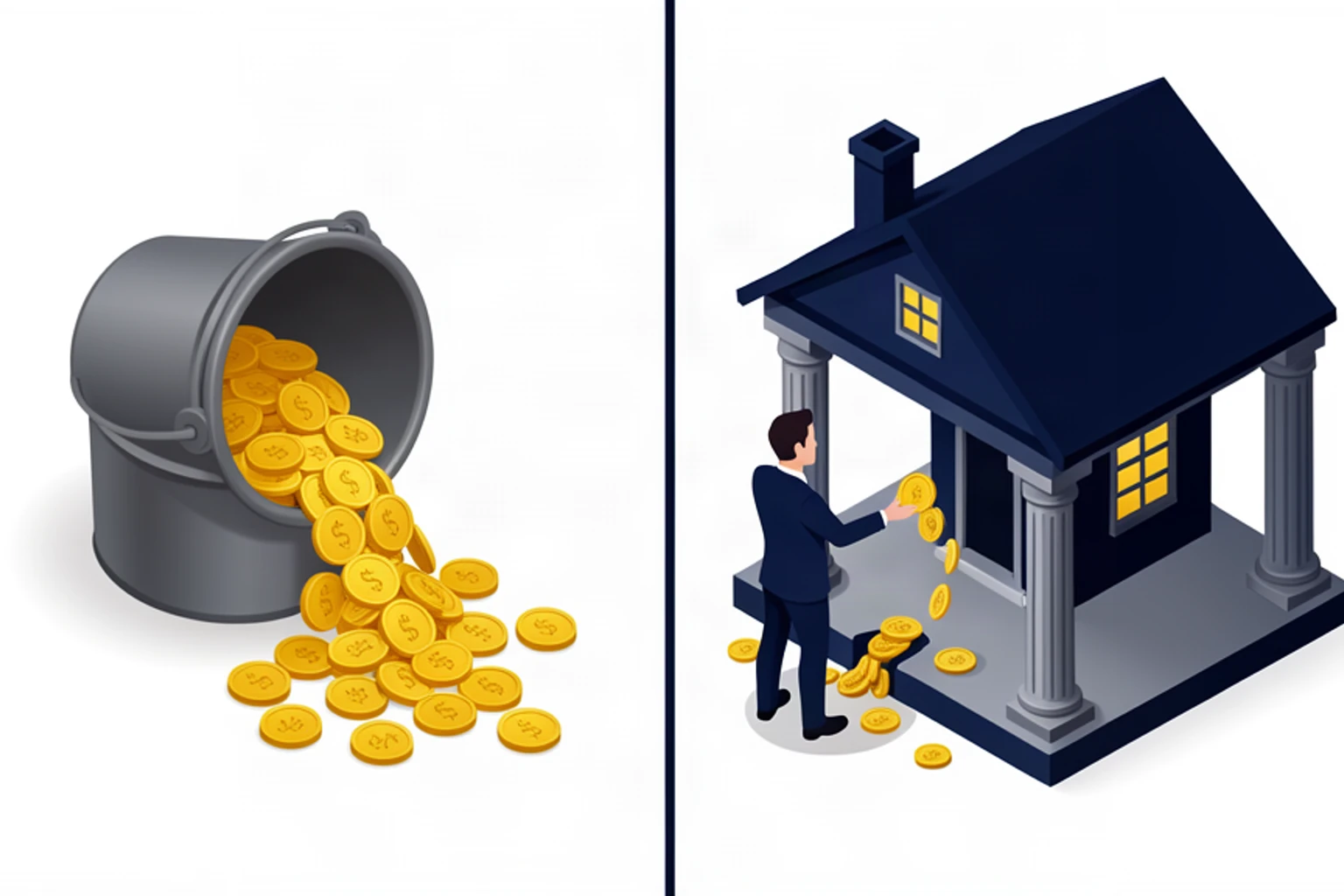
The Financial Alchemist move is simple to say and rare to do: let your lifestyle grow at half the speed of your income, and let the gap compound. You’ll still drive a nice car. You’ll just also be wealthy. The people who built seven-figure portfolios didn’t skip joy — they delayed the visible kind and banked the invisible kind, and the invisible kind is what eventually pays for everything.
One more layer before you go: this is also a freedom problem, not just a math problem. Every dollar of lifestyle creep is a month of runway you’re trading for a car you’ll replace anyway. Ask yourself what your business would be worth to you if you owned a year of expenses outright in cash, no bank involved. That feeling — that’s what the gap buys. The fee for it is just saying no to the second-most-expensive option.
If you recognised yourself in those five warning signs, you’re not broken and you’re not doomed. You’ve run a business your whole life — nobody ever taught you to run your money like one. That gap is exactly what I help Canadian business owners close: turning a great year into a great life instead of a bigger nut to crack.
Not sure where you stand? Take the 2-minute Financial House Assessment and get your personalized report — free.
Want to go deeper? Check out Essentials of Money ($50), The Wake Up Call ($50), or book a free discovery call.